
2014 YLT 5th Weekend Summary

Theme of Weekend 5: Emotions and Yoga: What are emotions and how can we use yoga to work with them intelligently and compassionately? What is the attachment process that we all experience as infants and throughout our relational lives and hoe does this relate to our emotions? (This is a year long course compressed into a weekend!)
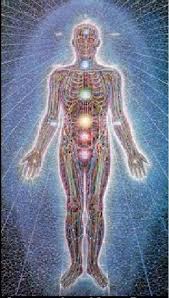
cosmic_heartMeditation: “Resting in the Open Heart”: Find the balance of weight and lightness, release the breath, and visualize a sphere of light centered in the heart and radiating into the space around you. Wait, rest here. Now visualize your center channel opening from the heart up through the crown chakra into the heavens, and down through the root chakra into the earth. Allow the energies of heaven and earth to pour in to your heart center and receive this as divine love. Let that love spread throughout your cellular body. With your heart energized, allow your own love to flow up and out into the heavens and down into mother earth. Then rest in place of balance with your open heart, earth and the heavens connected and clear. (This is an evolving process that may take a while…be patient! Remember, light is more powerful and accurate than energy: energy more powerful and accurate than structure; structure more powerful and accurate than thought.)

Mantra Practice: Learn Om Purnamdah…, Om Saha na vavatu…., and Om namaste astu Bhagavan, so we can go further.

Sutras Discussion: There are not many sutras dealing directly with emotions, but many imply them. And sometimes Patanjali refers to thought, but really means the underlying emotional energies that enliven the thoughts. (If you are finding the sutras to be a bit dry, please immerse yourself in the Katha Upanishad. It is a bit ‘juicier’!)

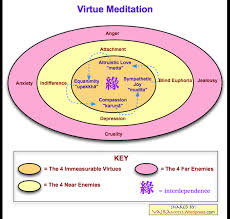
I-33: maitri karuna mudita upeksha… is used by the Buddhists as well as the yogis and gives instructions on how to counter the negative emotions of envy or jealousy, disgust, the desire to inflict harm and intolerance, by cultivating the positive ones of loving kindness, compassion, sympathetic joy and equanimity. This process, called pratypaksha bhavana in sutra II-33 is described in contemporary neuroscience as a re-wiring of the circuits that run from the amygdala to the pre-frontal cortex. The hard wired tendency to fear and anxiety, coming from the organism’s innate desire to survive, can be over-ridden with practice and patience. (See Rick Hanson’s note below.) In sutra II-34, Patanjali describes in even more detail the action of negative emotions and actually repeats ‘pratipaksha bhavanam from I-33, cultivating the opposite feelings/thought/emotions.

In II-7 and II-8, as part of the discussion of the impediments to practice, the kleshas, images-1Patanjali introduces attraction and aversion, raga and dvesa. I desperately want/need this. I equally, absolutely have to eliminate this. These are fun to work with. Emotions move us. That is what emotions are, from the Latin e – motere, to be moved. But what truly moves us? Love, compassion, altruism, the desire to improve the world? Sometimes. But also the relentless ‘what about me’ voices that can also shape and direct how we utilize our life force, our prana. Meditation practice cultivates the ability to differentiate and discriminate  the inner voices, to help restrain impulsiveness, and to choose more carefully how we act and what we say. Next weekend we will take up the yamas and niyamas, II-30 – II-45, with more unfolding of the emotional challenges of life.
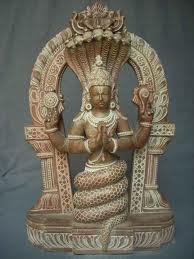
Question: What about attachment. Doesn’t vairagyam promote non-attachment? This brings us to the attachment process, a result of our mammalian brain/limbic system. Young mammals, and especially humans, need to have an intimate relationship with a more mature mammal, to ensure the growth and development of a healthy nervous system. The attachment profile describes the ways in which we enter into and sustain relationships with others (and aspects of ourselves!). (Here is a web site with some basic information on this.)

What we discover is that the fundamental attachment energy is love. In fact one can argue that love is the only emotion and all other emotions are variations on healthy and unhealthy expressions of love. This refers, of course, to unconditional love. No limits, no boundaries, no exclusions, the feminine side of an awakened mind. Of course, there are unhealthy expressions of attachment/bonding and for these we again need discrimination to be able to recognize these and ‘nirodh‘, or transform the energies carried in these behavioral patterns. Non-attachment means not being attached to the habits that keep reeking emotional havoc in your own mind, your loved ones and the world. It does not mean to be emotionally detached and passionless, but to live with a passion based on love.

This is what Patanjali is describing in I-2, yogash citta vrtti nirodha; yoga is the dissolution of the dysfunctional emotional patterns of the mind-field into the vast infinite present. But because of habits, priming and conditioning, collectively known as samskaras in Sanskrit, patterns that seem to have dissolved can reappear at any time. Which is why persistence in stabilizing the healthy emotions, abhyasa, is stressed early on in the sutras.

(Rick Hanson, co-author of Buddha’s Brain has a weekly letter with insights on integrating neuroscience and spiritual practice. His latest is perfectly timed to help in our discussion.

Hello,

It’s wonderful and also kind of crazy: right now, whatever you experience is slowly changing your brain.

Most of the good stuff we all want inside – the gratitude, kindness, grit, self-worth, confidence, feeling loved, resilience, compassion, insight, happiness, and inner peace – comes from turning passing experiences of these good qualities of mind and heart into lasting inner strengths woven into the fabric of the brain.

Unfortunately, there’s a bottleneck built into the brain: its evolved negativity bias that makes it like Velcro for bad experiences but Teflon for good ones – which makes it harder to turn beneficial experiences into inner strengths.

Meanwhile, feelings of stress, frustration, irritation disappointment, hurt, worry, and pain are being rapidly and efficiently coded into neural structure . . . relentlessly tilting the mind toward pessimism, anxiety, reactivity, contraction, drivenness, craving and clinging, weariness, and a blah blue mood.

Happily, you can use the power of mindfulness in everyday life to recognize and tune into wholesome experiences and then sustain present moment awareness of them. Since “neurons that fire together, wire together,” this mindful cultivation of beneficial thoughts, feelings, sensations, desires, and skills in your mind will naturally grow resources in your brain.

This week’s practice – be mind full of good – is a profoundly effective (and enjoyable!) path to psychological healing, well-being and effectiveness, sense of fulfillment, and the upper reaches of human potential.

Warmly,

Rick

Breathing Practice: Differentiating Ribs and Diaphragm through Viloma I and II

The heart or 4th chakra is the center of centers in the body/mind, but the 3rd chakra plays a key role in balancing emotional energies. By learning to feel our way around the mid body and deepen our perceptions of the breathing process, we can liberate a lot of bound up emotional energy. (As a response to danger the organism mobilizes its emotional energies to prepare for movement. It can flee (run using legs/ lower chakras), fight (using arms if human, claws and jaws for most, upper chakras), or freeze. The freeze response goes right to the diaphragm needs to be released.)
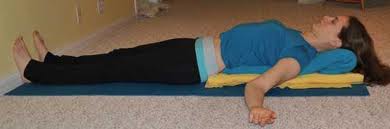
UnknownUsing folded blankets or a small bolster to support the spine and chest, let the body relax and feel your breath. Notice the in breath, the out breath, and the natural pauses between. Soften more and more. When the time is right, begin to allow the expanding ribs to be the main component of the inhalation, and the squeezing of the lower body pushing the diaphragm up into the chest be the primary component of the exhalation. Allow the ribs to stay a little more open as you exhale, allow the diaphragm to wait a bit on the inhale. Learn to differentiate between the ribs and diaphragm.

The following is one of many variations of viloma pranayama.

Viloma I. From the ribs, inhale part way and pause. Holding the chest open release the sides of the diaphragm where they might be confused with the ribs, without releasing the breath. Repeat: using the ribs, inhale further, pause. During the pause, release the perimeter of the diaphragm and feel a subtle squeezing of the inner abdominal wall without releasing the breath. Repeat a third time and then release the breath slowly and evenly. During the pauses keep eyes, ears, throat and brain passive. That completes one cycle. Fee free to take a few normal breaths before beginning the next cycle if necessary. Also, the cycle given here has three steps. Feel free to do two, or many (like sipping the breath) if that feels better. When the last cycle is completed, relax and observe the breath.

Viloma II: Take a short but full inhalation and divide the exhalation into stages. Exhale part way, releasing the diaphragm but not dropping the chest. Pause and recharge the ribs so they stay open. Exhale step two, releasing diaphragm but slowing down the ribs;pause and recharge the ribs. Final stage of exhalation, natural pause, recharge the ribs softly. This completes one cycle. Rest and repeat cycles to one’s capacity. At the end, feel the changes inside that arise from the practice.

Anatomy/Kinesiology: In flipping the dog, the supporting shoulder is vulnerable to injury. Unknown-1How do we train the arms to be strong and flexible simultaneously?
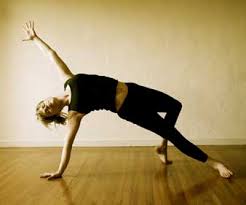
Shoulder problems arise here because the gleno-humeral (aka shoulder) joint tends to be hyper mobile and the shoulder blade/scapula hypo mobile. Thus it is easy to partially ‘dislocate’ the humerus bone when weight bearing in odd positions like this. The clue is to mobilize the shoulder blade and collar bone so they acts as a bridge connecting core-spine-ribs to the arm. If the scapula tracks accurately, there is no strain on the shoulder joint. The achromio-clavicular or ‘ac’ joint and sterno-clavicular joint also help stabilize the shoulder by bringing support from the sternum front/chest through the collar bone.

On the muscular side, the posterior rotator cuff can be over-active, especially in the arms to the side position. Stand with your arms extending forward, like a standing plank position. Feel how the humerus bone is stable in the joint in this position by following the line of energy from the spine and ribs through the shoulder girdle into the arms and out the hands .

Our quadripedal friends live here. To deepen the sensation, remember that the arms are made for hugging. To bring your arms out to the side, just opne the hug wider and wider, but keep the slight curve in the energy field. Notice when and if there is a break in the energy.

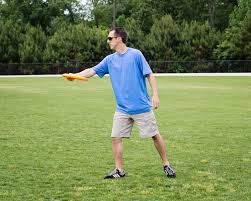
Most students eventually, unconsciously, move the arms and leave the shoulder girdle behind, mis-aligning the shoulder joint. Then they try to ‘stretch’ to open the chest. From the perspective of the energy body, this break is obvious, but you have to be there in the sensation to feel it. Try stopping before you get to 180 degrees, or imagine that you are just hugging an elephant. Explore one arm Unknown-4at a time by imagining that your are throwing a frisbee. The feeling is that of uncoiling the inner line of the body/arm, not contracting the outer shoulder, as the energy continues in a line out through the fingers and into space.
Asana Practice: Track action of third chakra/solar plexus/samana vayu energy and distribute it evenly into upper limbs and head / and lowers limbs and tail. Begin with standing poses, through dog and variations to inversions, backbends, (Saturday), forward bends (Sunday), then sarvangasana, variations as inspired, savasana.
2014 YLT 4th Weekend Summary

Theme of Weekend 4: The Physics of Asana: Understanding fulcrums and leverage, props and support, in your practice and teaching of asana.

Meditation: Resting in Being (Hsin Hsin Ming for clues!)
Mantra Practice: Continue from last month.

Sutras Discussion: 1. Please talk about brahmacharya (from Sutra II-38): Brahmacharya literally means ‘walking in God’. As living beings, we are endowed with a certain amount of energy, strength, and power (virya) to be used in the world. How we use that energy determines the quality of our lives. Are we self-centered? Lost and confused? Chasing shadows? Sexual energy is a major driving force in nature and Patanjali addresses this here, but celibacy is a common but poor translation of brahmacharya. The sutras do have a masculine/transcendence/purusha bias versus the feminine/immanence/prakriti, and if we read between the lines, many commentators (all guys by the way) seem to imply that sex is a hindrance to your spiritual development. It certainly could be, if the 2nd chakra energy is not integrated into the whole being and runs amok in the subconscious. But trying to repress the sexual energy is not a solution either, as can be seen by the Catholic Church scandals of the past decades. Use the energies of life wisely. It takes life times of practice and study to do this, so be patient and persistent. But liberation does not require the suppression of the creative energies, only its integration.

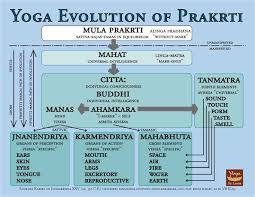
images-72. The gunas; In sutra II-18 and II-19, Patanjali discusses the gunas, the three qualities of prakriti. In II-19, he connects the gunas to the 24 components of the Samkhya model of reality dealing with prakriti, dividing these 24 into 4 categories, ranging from most tangible to most subtle.  There are 16 most tangible or gross body components  and they include the 5 organs of action, 5 organs of perception, and the 5 gross elements. Those are obvious. Manas or ‘lower mind’ is the 16th, as it is the least subtle of the mental components. Next come the 6 subtle components; the 5 energies that correspond with he organs of perception: sight, sound, touch, taste and smell; and ahamkara, the egoic mind, more subtle than manas. Mahat or buddhi is in a category by itself, as it is more subtle than the previous components, but still distinctive as a separate entity. The final category is prakriti itself, before it manifests as any particular form. These models or maps are fun, but don’t get too distracted by them. Live…Fully… that is all you need to awaken.

3. Vibhuti Pada? Forget the third chapter, after samyama, as it is too technical and not relevant to awakening. Keep your study practical. Can you immediately apply this sutra to your moment to moment experience? If so, go for it. If not, find something else. There is plenty to work with, but try not to get lost in theoretical speculation. It is a waste of time if your goal is awakening. If your goal is to be a Yoga Sutras scholar, that is another story.

Here are some practical sutras to work with: I-12 to I-16, the practices of abhyasa and vairagyam.

Abhyasa: choosing to put your energy into actions/thoughts/practices that stabilize mindfulness, emotional balance (samatvam), clarity, joy, delight; or any mind state that comes from a deep sense of inner peace and wisdom; and doing this lovingly, persistently, over many years and lifetimes. Make this practice moment to moment!

Vairagyam: Choosing to withdraw energy from habits, actions, thoughts, beliefs, mind states that perpetuate unnecessary pain, negative emotions and suffering. This is also known as ‘maturing’ or growing up into spiritual adulthood. Make this practice moment to moment! (Sutra I-16 has some anti-feminine bias, so be careful with that one. It is crucial to differentiate Purusha from Prakriti, the changeless eternal from the transient world of forms. Differentiating leads to deeper levels of integration. However, ‘indifference to nature’, is not awakening. On the contrary, it is a place of ‘stuckness’.)

Asana Practice:

As we continue our inquiry into the energy and information flow passing through our body/minds, we come to the practical side of asana practice. There are many ways we use yoga postures to enhance perception and sensitivity to energy, and using props to highlight keys places of leverage and balance is one of B.K. S. Iyengar’s greatest gifts to the modern yogi. The Iyengar system has spawned an amazing number of ways to use props to improve leverage, awaken a deeper sense of space in the poses, and open and integrate the chakra energies. We will explore a few possibilities.

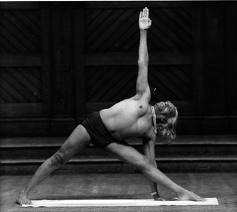
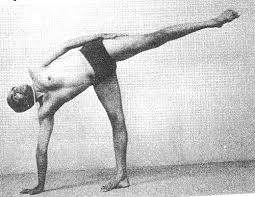
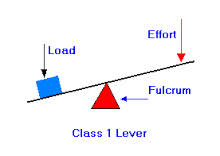
Because of the long bones of the limbs and the action of the joints, the human body is an amazing place to explore leverage and the role of fulcrums in creating a sense of balance Unknownand ease, of sthira and sukham. This class of leverage is the see-saw action we use in opening Unknown-1the hip joints. When we grow a tail, and use the inner back heel as a continuation of tail energy, the center of the front leg hip socket is the fulcrum around which the pelvis can rotate images-8freely, and also a center around which the body can find the stillness of perfect balance. The leverage of the back leg/tail counter-balancing the torso is most clearly seen in half moon pose, especially when  you compare Iyengar to the class 1 level picture. The same principle applies to trikonasana and the other standing poses.

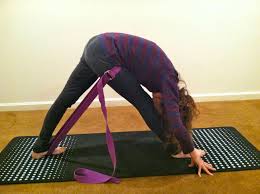
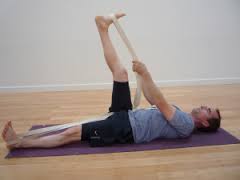
The use of belts allow us to further enhance the connection of the back leg/tail and front hip joint in the main hip opening postures such as parvsvottanasana, here demonstrated by Iyengar teacher Roni Brissette, images and supta padangusthasana. Note the second belt in supta padangusthasana from the upper hip to the lower foot. A more precise placement of the belt would have it around the metatarsal bones, especially the big toe of that lower leg. That gives you the ability to adjust inner and outer rotations.images-1 Most beginners use only the upper leg belt and never quite get into the hip joint. The same action can be taken into ardha chandrasana and revolved ardha chandrasana.

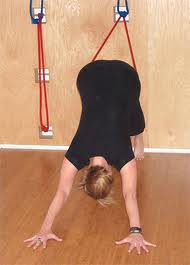
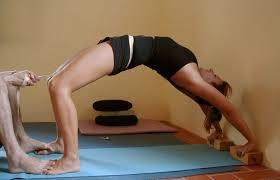
Another old favorite, done with belts or wall ropes is the hanging dog pose. images-16Here the rope loop acts as an accessory tail, teaching the muladhara to trifurcate, giving a strong traction to the hip sockets and tops of the thigh bones. When the hips are open, Unknown-1the leverage releases the spinal column. Speaking of belts and tails, here is a great photo from Lauren Cahn in the upside down downward dog, or urdhva dhanurasana. Notice the action and direction of the pull of the belt. The tail lengthens out dynamically. The tendency is to confuse the tail and the hips and overly contract the muladhara. The use of blocks takes some of the effort from the shoulders.

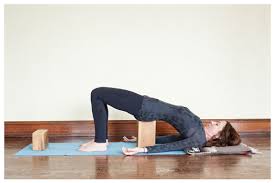
Once the hips and tail are awake and the energy is flowing freely, (1st chakra) we can look to opening the sacroilliac joints, a key, butUnknown-3 challenging action. Here we switch to a wooden block, or brick as they say in Pune. Iyengar instructor Holly Walck is demonstrating the use of a block in bridge pose to open the core. The release the sacrum the fulcrum shifts from the hip joints to the sacro-illiacs. The feet stay engaged, the pelvis is anchored to the block, and the tail can adjust up or down to find the happy spot for the sacrum. In this photo, the student needs to release the throat as the fifth chakra is compressing. More height under the shoulders and a slight rotation of the skull will align 5th and sixth chakras with the sacral area or the 2nd chakra. images-3

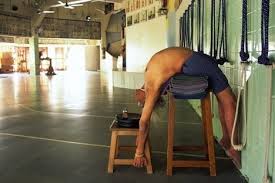
For those looking for a deeper experience, check this out. Here Iyengar is using a stool with blankets to open his sacral-lumbar region and the heart, the wall to activate his feel and muladhara, and another stool to anchor his hands (notice the length through his wrists, elbows and armpits.) He has been exploring these deep supported backbends for years, as this is his (and the human’s) edge.

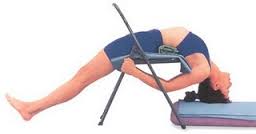
Unknown-1Leveraging the different vertebrae of the spinal column can also be done with chairs. These poses are quite intense and care must be taken not to hang out or hold on, but to use the chair to direct perception. Iyengar teacher, Kisa Davison, at left in viparita dandasana, is demonstrating the classical Iyengar chair backbend. Her head is supported, legs dynamic, but there is some compression at T-12 as seen by the sharp angle between the bottom of the ribs and the abdomen. The seat of the chair would be better located either lower or higher on the spine, as T-12 is very vulnerable to this hinging. If you work organically, rotating the liver would also help ease the transition between 3rd and 4th chakras.Unknown-2

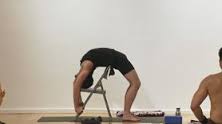
Here the back of the chair is used by Noah Maze to open the 3rd chakra region. Note the hands and compare the length of the armpits to those of Mr. Iyengar, just to get used to seeing energy patterns. images-1Priscilla Polonia is using the chair and a bolster in supported camel pose (ustrasana). Feet stay active, pressing down, tail energy keeps lengthening, and the head is supported by the back of the chair. Adjust the placement and size of the bolster to fit the needs of your body.

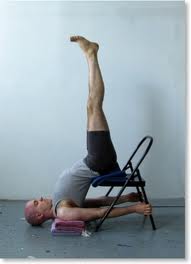
Unknown-3Finally, Iyengar’s chair sarvangasana, here demonstrated by Iyengar teacher Witold Fitz-Simon, uses blankets (or a bolster) for the shoulders, padding for the sacrum, and the arms extend through to the back legs. The arms can also be outside if the shoulders are lacking in flexibility. A bolster can also be placed on the seat of the chair and the legs can then extend back into its support. Unknown-4

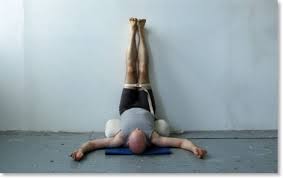
A simpler pose for beginners, and everybody, is viparita karani, one of the main restorative postures. Witold has the bolster near the wall so the legs are supported and a belt contains the leg energy.

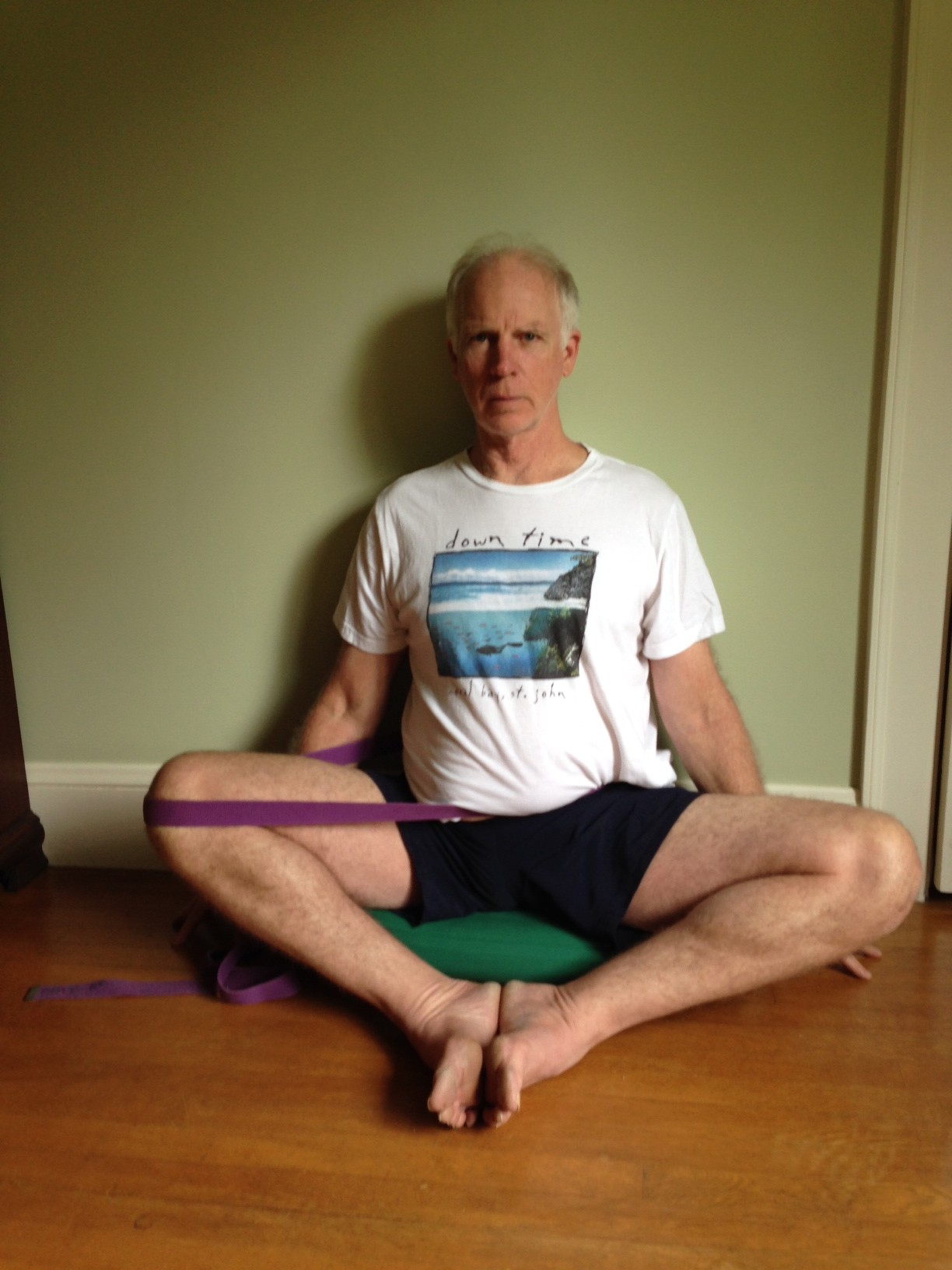
get-attachment.aspxBelts can also be used in baddha konasana and supta baddha konasana. In baddha konasana, a belt (or two, if you want to do both legs) is wrapped around the pelvis and one knee. Make sure that when you tighten the belt, the inner knee skin is pulled from the inside out and around to the outside of the knee. Use the femur bone to push straight out into the belt. Do not try to pull the thigh back toward the wall or down to the floor. Use the belt as a vector and feel its effect of the opposite sacro-illiac joint. Do second side, flipping the belt completely over. Satnd up and walk around to feel the effects. Unknown-6

In supta baddha konasana, the belt wraps around the pelvis and comes under the feet at the ankles. Loosen or tighten to find a happy place. Slightly extend through the feet to simulate an extending tail so the muladhara energy lengthens the groins. Use blocks, blankets or bolsters to support the thighs so there is no sense of pulling in the inner thigh (gracilis muscle) which can lock up quite easily. A bolster or blanket can also be used to support the torso and head.

2014 YLT: 3rd Weekend Summary

Theme of Weekend 3 : What is Mind? (part 1)

Meditation: Heart Field followed by Hub of Awareness (see previous post).
Continuing to rest in non-dual emptiness (aka being, presence, Purusha, atman)
at the ‘hub’, while allowing the world to unfold. No need to repress or push the world away.

Pranayama Practice: Sama Vrtti and differentiating ribs, spine and diaphragm.

Asana Practice: Continue refining what we have learned in the first two sessions. From the meditation, tracking energy flow from heart to feet/earth and back, integrating into arms and skull, through crown chakra to the heavens, and back to the heart. More work with standing poses, dogs, and beginning to explore inversions, backbends, restoratives. How do yoga postures affect ‘mind states? How does our approach, our belief systems about the body, about practice, affect mind states? How are emotional energies affected?

Mantra/Chanting: Learn: 1. Invocation to Patanjali: 2. Om namste astu bhagavan…
3. Om saha navavatu… and 4. Purnamadah, purnamidam… (See below.)

Yoga Sutras: Questions arising from study group:

Question 1:  Please comment on the use of mantras in one’s practice, especially ‘Om’. Are there any secrets to be found in the chanting of mantras? Maybe not secrets, just how does this work? How does this help our practice?
imagesAnswer: there are many layers to working with mantras, whether recited out loud, or silently in a practice known as japa. The most obvious is that the mantra provides a seed to focus the mind. This brings stability. When repeated over and over, the possibility of the mind dissolving into emptiness arises as the need to anticipate what might come next disappears. The aspect of mind known as manas (see below) continues the chanting and the buddhi can rest in silence. Another aspect is that each of the Sanskrit sounds have a specific vibration that affects the whole organism. The way the vowels and consonants are ordered creates waves of sound that bring coherence. Different mantras have different wave patterns. Om is the simplest and most powerful as it creates a very simple coherent circular or spherical vibration. The best way to explore is to try chanting in your practice. It will help keep you breathing, if nothing else!

Question 2:  Please comment on ways to clarify the mind as mentioned in Sutras I-33 to I-39. Answer: Big question! Patanjali is very open minded about finding what works. Sutra images1-33 is worth a book in itself, but recognizes that negative emotional patterns and habits reek havoc on the quietness of the mind and suggests four practices, the Brahma Viharas, which are also an important part of Buddhist teaching. I-34 uses the stillness at the end of exhalation, possibly cultivated through pranayama. As the breath becomes more effortless, through asana as an example, the mind settles naturally. When the breath is still, the mind is quiet. The rest of these sutras are a bit esoteric, except for the last, where Patanjali says that anything that works for you can be an object of meditation.

Question 3:  How do we relate ways to clarify the mind to the three gunas (sattva, rajas, and tamas)? A rajasic mind needs to quiet down. Longer exhalations and restorative poses are some ways to help. A dull mind needs activation, exercise, fresh air, backbends, movement to help bring the energy up. A sattvic mind is already there. Enjoy.

Main Theme: What do we mean by ‘mind’?
This a complex question that will be unfolded over three seperate weekends in the course, using Patanjali and other traditional perspectives as well as modern neuro-scientific understandings. In this introduction, we will look at the overall sense of mind and mind activity. In later weekends we will go into emotions and some cutting edge neuroscience. As we are working with Patanjali, it will be helpful to see how he looks at mind. Then we will compare that with Dan Siegel’s interpersonal neurobiology.

Samkhya, the philosophical foundation of the Yoga Sutras, describes mind, known in general as citta, as involving three distinct but interwoven processes.

The first process, known as manas (YS 1-35, II – 53, III-48), organizes sensory information, records and stores memory and allows for ‘auto-pilot’ actions. It is the bookkeeper, filer and office manager of the citta.

The ahamkara, literally the “I” maker, builds a self sense out of experiences and includes Unknownlikes and dislikes, tendencies and habits. Although there is no direct mention of the ahamkara in Patanjali, it is implied in sutra I-4, vrtti sarupyam itaratra. Here Patanjali describes the general state of confusing the transient movements of mind, in other words, the functioning of the mind, with the immutable Purusha, the True Self in Samkhya. The ahamkara, sometimes called the ego in Western psychology, is an absolutely necessary aspect of a healthy mind. It is not the true nature of ‘I”, but can easily convince itself otherwise. We will develop this very important idea of “Self” later in the course.

The buddhi is the intelligence. This is cultivated in “mindfulness practice” and refers to awareness of what is arising in the present moment, analysis, and on going choice of action. This is in contrast with the manas, where decisions are made sub-consciously from habit and routine. In integration, buddhi and manas can work together skillfully, with the sub-routines operating in the background while modifications are made moment to moment. Reading is an example. As you read these words, you have previously learned a language with vocabulary and grammar and this foundation allows the intelligence to contemplate the meaning, looking for nuances and implications from the writer.

The word vrtti, mind activity, refers to the energetic nature of mind. Mind is not a noun, it is a verb. Mind is dynamic activity. The Self, or Purusha in the Sutras, is not the mind. According to Patanjali, mind activity, aka, energy/information flow, can come in three possible flavors: too much, too little, and just right, like the Goldilocks story. The Sanskrit term guna refers to energy in general, but here we will use it to examine mental energy. The first guna is rajas or the adjective form, rajasic, refers to action or movement; inertia of motion is name offered by Sir Isaac Newton. When out of balance, i.e., too much rajas, these energies will be in the form of chaos or aggresssiveness, and the mind field is disruptive and unstable. Tamas, or tamasic, refers to the opposite of movement, inertia of rest. When out of balance the stability of tamas degenerates into stagnation. Here the mind activity is sluggish or stupified.

In Sattva or sattvic states, mind activity is harmonious with a perfect, dynamic balance between movement and stability. This is an excellent definition of mental health, also known as  integration. Dan Siegel, the acronym man, uses the word FACES to highlite the qualities demonstrated in an healthy integrated system, like the human nervous system. It is Flexible, Adaptable, Coherent, Energized and Stable. Just about every neuro-psychological disorder falls into one of two categories where the process on neural integration is disrupted: disorders of chaos (excess rajas) or rigidity (excess tamas).

In your practice, observe these aspects of mind activity. Learn to recognize them in action. Emotional self regulation is the key to mental health and the beginning of yoga. We could spend years exploring the dimensions of mental health, but this is a tiny beginning.

images-3Dan Siegel, author of ‘The Developing Mind” and many other mind-based books, defines the mind as “an embodied and relational process that organizes the flow of energy and information.” “Embodied” recognizes the there is no mind-body split, although this split is often implied in modern psychological language. “Relational’ recognizes that we are embedded in relationships and mind does not exist in isolation, although the mind can often convince itself that this is so. The body is energy. Information is a highly complex form of energy and the self-organizing aspects of mind uses information to bring further levels of integration to maintain health and well being. Yoga taps into this process and develops and refines it further and further.

One of the most important types of mind activity is integration, described by Dan as ” the collaborative, linking functions that coordinate various levels of processes within the mind and between people.” (DM pg 301) It can also be described as the linking of differentiated systems to create something larger than the sum of the parts. Hand – eye coordination is an example of integration. The visual system and the kinesthetic system work together to allow a complex motor skill such as hitting or catching a baseball. These are sattvic mind states.

Reading is another example of integration. The retina registers light and dark patterns, the pattern recognition portion of the brain interprets the information into words, and the meaning making aspect draws conclusions, makes connections, inferences, etc. Now, If you can read Thai, you will understand that การให้ทานความรู้เป็นทานอันประเสริฐสุด says ‘Passing on knowledge is the greatest gift.” If you do not read the Thai script not, the forms do not convey any information.

The term samadhi, the primary practice of used in the Yoga Sutras, describes a state of  relaxed focused attention directed onto the process of attention. Conscious attention is integrating, whether as mindful attending to the present, focal attention known as samadhi, or insight where attention rests in itself. These involve using a sustained sattvic flow of energy/information to develop and strengthen deeper and deeper states of integration. Yoga studies the process of attention and integration and refines this over and over again.

In “Mindsight” Dan Siegel defines eight domains of integration,
(and I add 1, dorsal/ventral). The first and most basic is:

Integration of Consciousness, which essentially is the definition of yoga. This refers to building skills to stabilize attention and then working with the global awareness of all aspects of our lives to help bring them into a state of harmony. Perceptions, bodily sensations, emotions, actions, relationships and our own thoughts are examined. The “Hub of Awareness” meditation is the key practice.

Next come the three ‘spatial’ domains, highly relevant to the somanauts/yoga students.

Horizontal Integration helps to link right and left brain activities. The right develops early on and involves spatial awareness, imagination, non-verbal communication, holistic thinking and more. The left brain develops later and is responsible for logic, linearity, literal thinking, written and spoken language and more. Read ” A Stroke of Insight” by Jill Bolt Taylor for a fascinating unfolding of some right brain/left brain skills and perspectives. If the linking between these hemispheres is blocked, the richness and complexity of life can be lost. Yoga poses and other forms of mindful movement help integrate right and left sides of the brain.

Vertical Integration refers to the vertical nature of the nervous system with nerves form the lower body ascending up through the spinal cord into the brain stem, the limbic structures and the cortex. People who ‘live in their heads’ are lacking in vertical integration. Hatha yoga brings the awareness and intelligence of the cells, organs, muscles and bones into conscious awareness and is thus a major practice of vertical integration.

Depth or Dorsal/Ventral Integration refers to the third and most challenging of the spatial directions, front to back. Most of us have very little perception of depth in the body. Head/tail and right/left are relatively easy, but we are pretty shallow from front to back. This becomes important as we dive into embryology and discover the tubular nature of structures. Without dorsal/ventral integration, we have no middle, no center. we are two dimensional. Breathing begins the process of discovering the inside that differentiates front from back. When e find the ‘expansion fields, we can take that feeling anywhere.

The next three involve temporal domains, where aspects past, present and future are integrated.

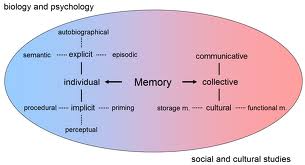
images-1Memory Integration involves linking two basic types of memory. Implicit memory begins at conception if not before and encodes all the experiences the cell, enmbryo, fetus, baby encounters. These memories shape our behavior and relationships from way in the background. Explicit memory includes autobiographical memory, the sense that ‘I remember’ and often doesn’t arise until the second year of life. In a healthy individual the implicit encodings and our ‘remembering work together to help us stay in the present moment with awareness and sensitivity. Trauma can impair memory integration. PTSD, post traumatic stress disorder blocks the implicit experience of the trauma to become part of explicit memory. Thus a war veteran can hear a firecracker explode and instantaneously be thrown into the war zone, which is experienced as happening now.

Narrative Integration is bringing coherence to the telling of our own story. Interestingly, the narrative function resides in the left hemishere and the autobiographical memory in the left. The more we can use story to make sense of our experiences and our actions, especially those of our childhood, and bring coherence to our life stories, the better parents we will be.

Temporal Integration brings in the capacity of the pre-frontal cortex to anticipate the future and even the deaths of ourselves and loved ones. This can induce more than a fair amount of anxiety so mindfulness practice can bring some ease and relaxation around ‘not knowing’ and help us be more comfortable with uncertainty. Emptiness meditation also brings insight into the nature of birth and death.

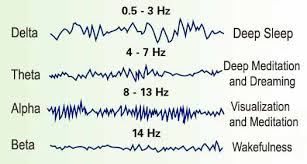
State integration allows us to acknowledge the different ‘mind states’ we naturally go through during the cpurse of a day. A ‘mind state” is Unknown“the total pattern of activations in the brain at a particular moment in time.” DM pg 208. We can all recognize the difference between the states of deep sleep, dream sleep and waking. And during waking, we can be alert, agitated, meditative, relaxed etc. Each of these involves a pattern of brain activity which can often be demonstrated through the electrical patterns known as brain waves. Sometimes we can generate conflicting states or ones we find to be ‘unpleasant’. Rather than rejecting or trying to deny their existence, we see their presence and look more mindfully at their expressions, giving permission to have these states. Spiritual bypassing is an attempt to ignore, deny or avoid states that do not meet our ‘spiritual standards’. This is a very unhealthy approach. Compassion and spacious understanding are healing.

Interpersonal Integration recognizes that we are all ‘interbeing’ to use Thich Nhat Hahn’s term. We all are dependent upon others for comfort, survival, recognition, fun and more. Our brains have evolved to align with other brains, our minds with other minds, to create mind states of two and more beings entwined and attuned. This helps us stay grounded in the world. We learn to come together and separate. Sometimes those separations are smooth, sometimes they are ruptures, leaving psychic wounds. Learning how to repair these ruptures is crucial to all relationships.

om saha na vavatu
namaste astu
patanjali invocation