Barcelona, 2013

“The Sacred Side of Barcelona” images
“Sacred Sounds”

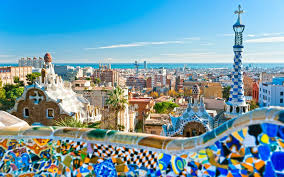
Last Sunday found us wandering through the back roads of the hillside Park Güell, trying to find the famous mosaics, playful buildings and salamander attributed to Barcelona’s famous architect Antoni Gaudi and the great views of the city and harbor. Coming around a corner on one of the many winding paths, we were suddenly immersed in waves of beautiful sounds coming from one of the street musicians. The music sounded almost like a steel drum, only softer, more subtle, and it was coming from an instrument I had never seen before, a ‘PanArt Hang’. Pure heart sounds that stopped you in your tracks and dropped you into the infinite. Sacred sounds. Alex Permanyer was the musician and after soaking in the sounds a bit and asking him about the instrument he was playing I bought one of his cd’s . Later on, upon opening it, I found this quote ” Silence is not the absence of sound, but it is the absence of oneself.”  Cosmic attunement is such a delight. Here is Alex in Belguim.  http://youtu.be/TKTZLxvJbus.

“Sacred Space”

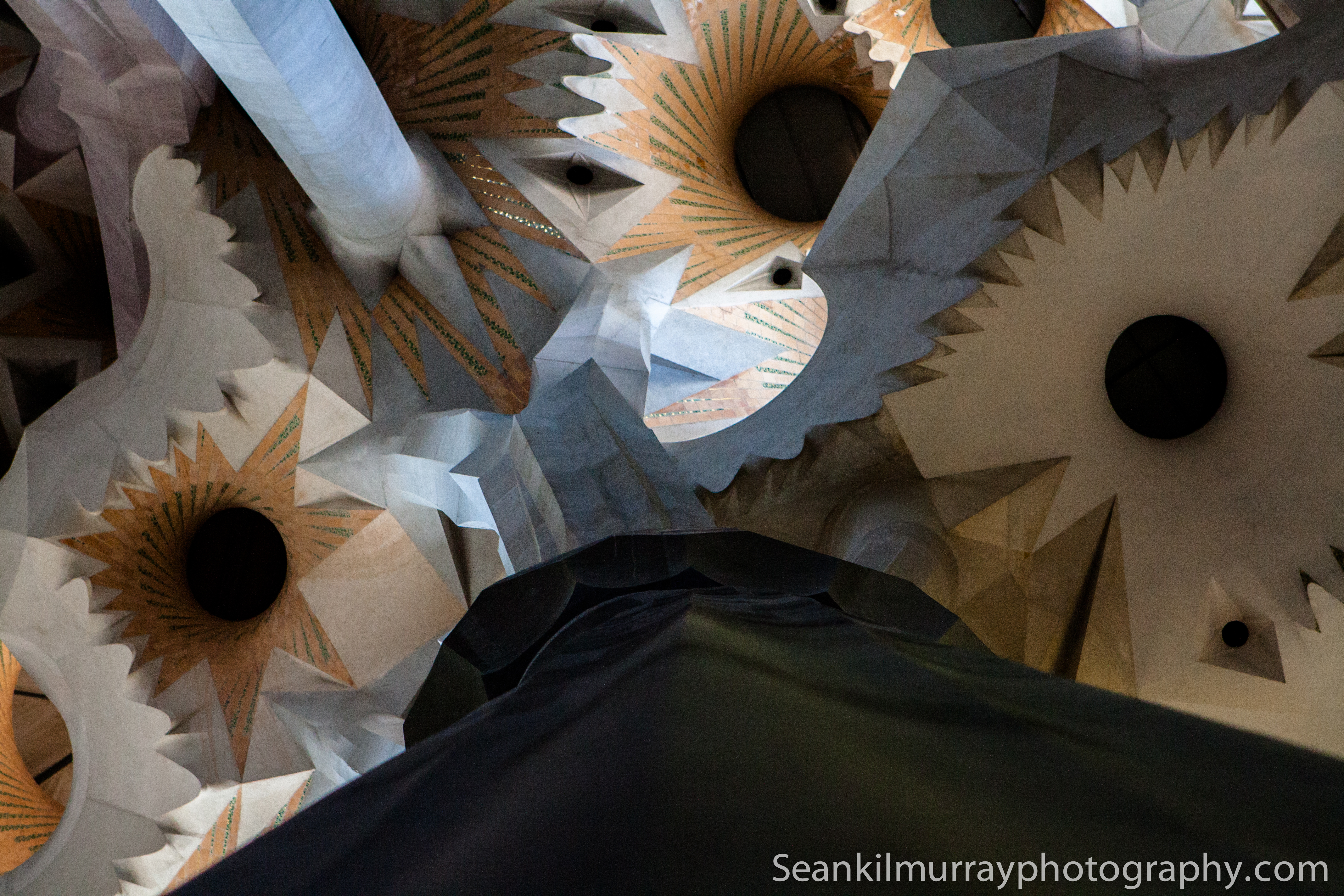
Earlier that same Sunday (although all days, all moments are sacred, stillness can seem to be more accessible on Sundays), we spent the morning in Gaudi’s masterpiece, the vast cathedral known as the Sagrada Familia. gaudi sagrada familia collumnsFrom the outside it is busy and somewhat chaotic with all of the cranes, scaffolding and construction equipment, get-attachment-3(The hope is to be complete by 2026), but the interior is like nothing else on earth. Gaudi was a great student of nature and incorporated natural forms, shapes and patterns in all of his work. A master of engineering, his use of supporting columns and hyperbolic arches is stunning. The effect is of standing in a magical redwood forest, with the columns as trees and the canopy bursting open with branches leaves and light. The photo to the right is a view looking up one of the columns to the ceiling.
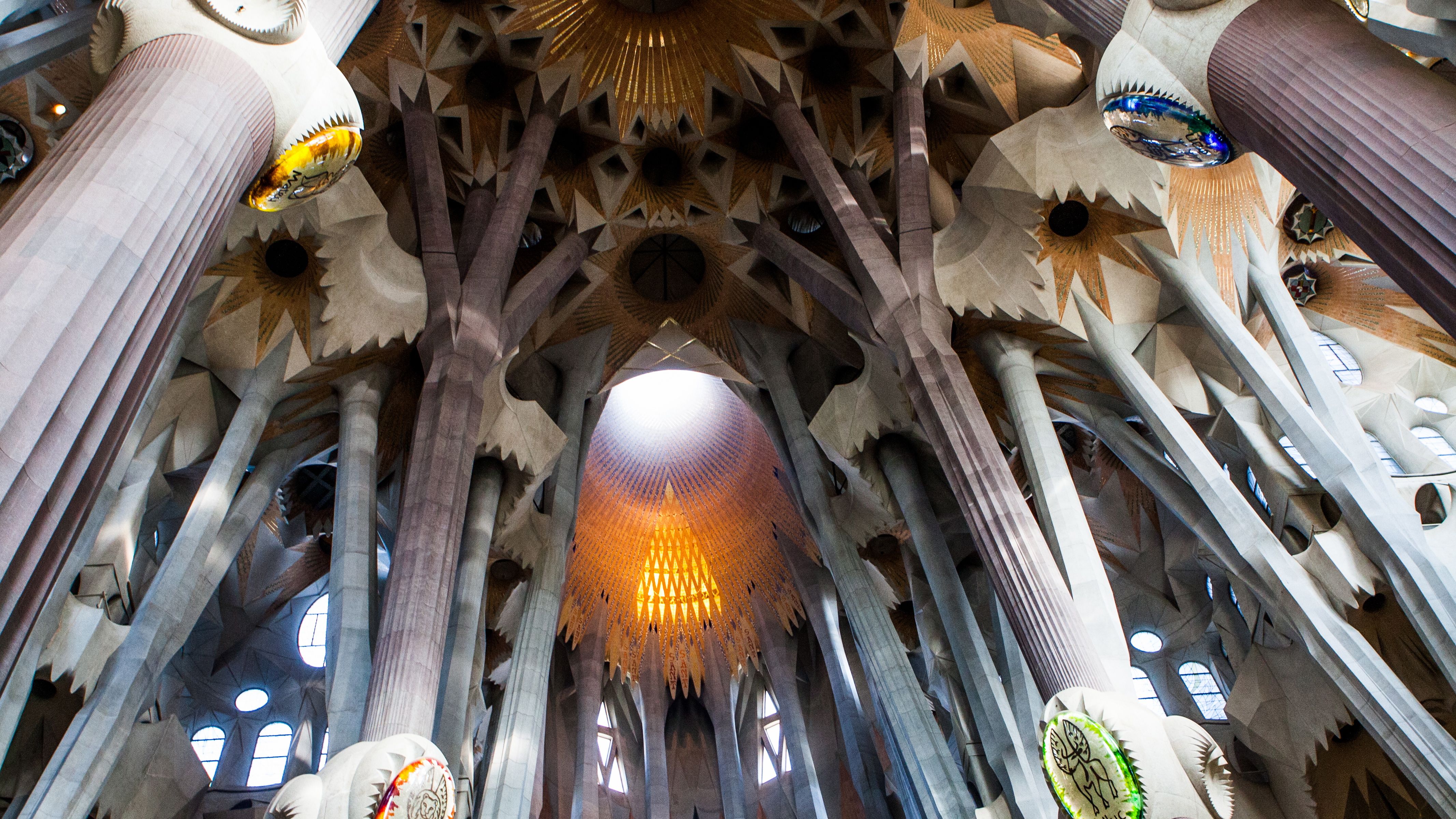
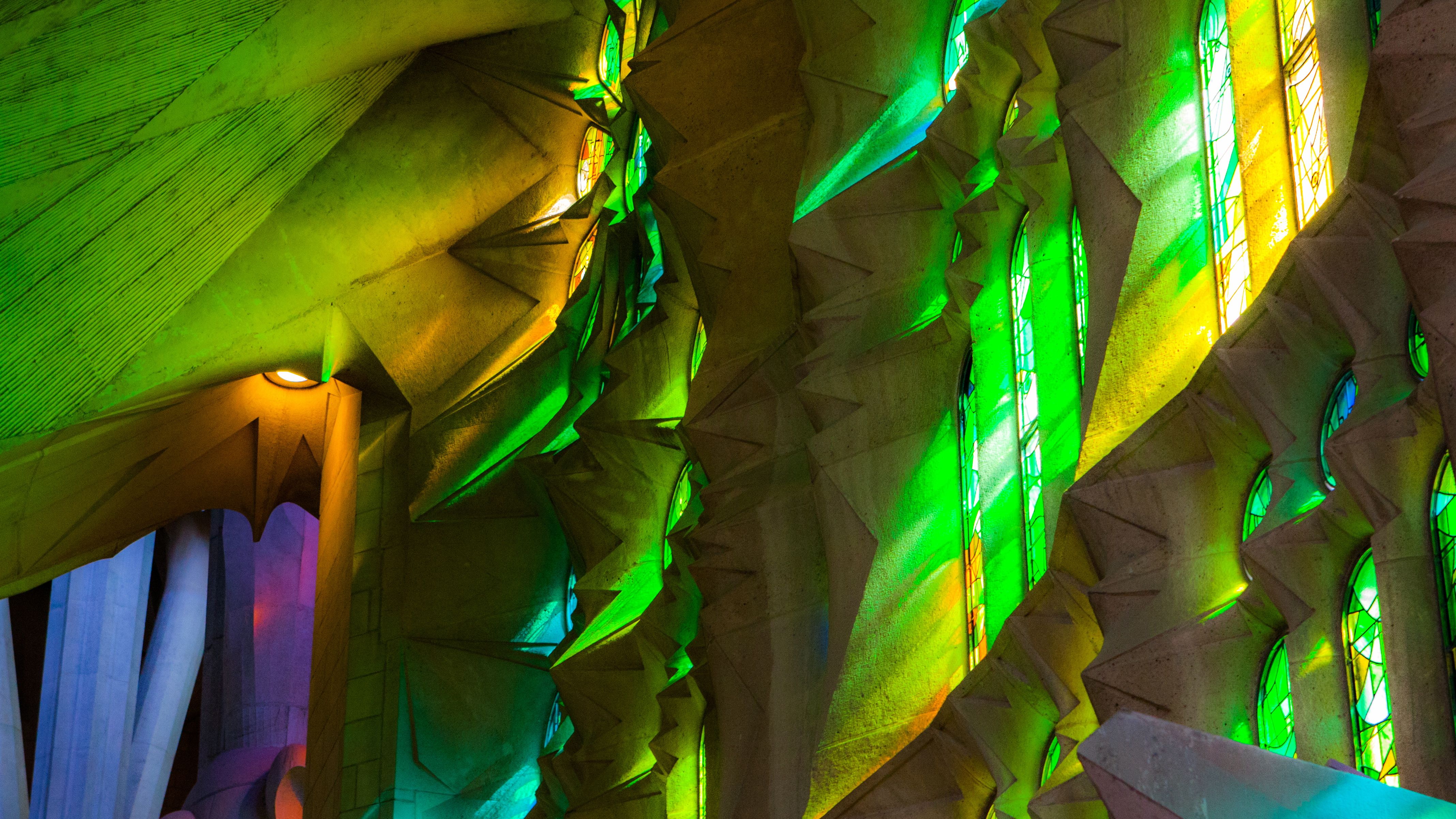
Gaudi was also amazing with his use of sunlight and stained glass.gaudi light edited This is a momentary glimpse of how the morning light illumines the interior spaces.  And it changes moment to moment. And it is much more stunning in person, in the vastness of the nave. The Sagrada Familia was Gaudi’s true passion and the sacred space he envisioned and created is transcendent.
“Sacred Embodiment”

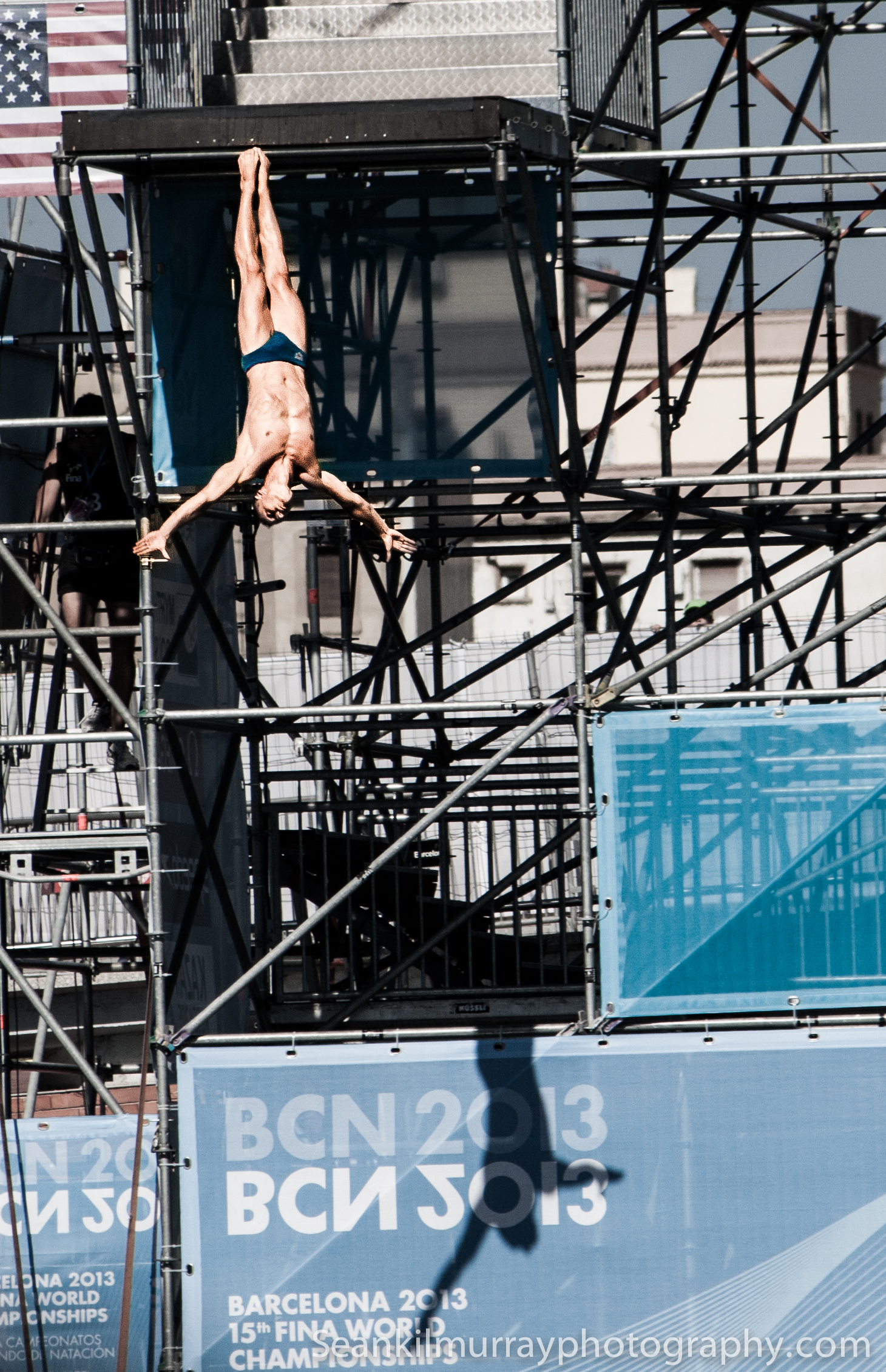
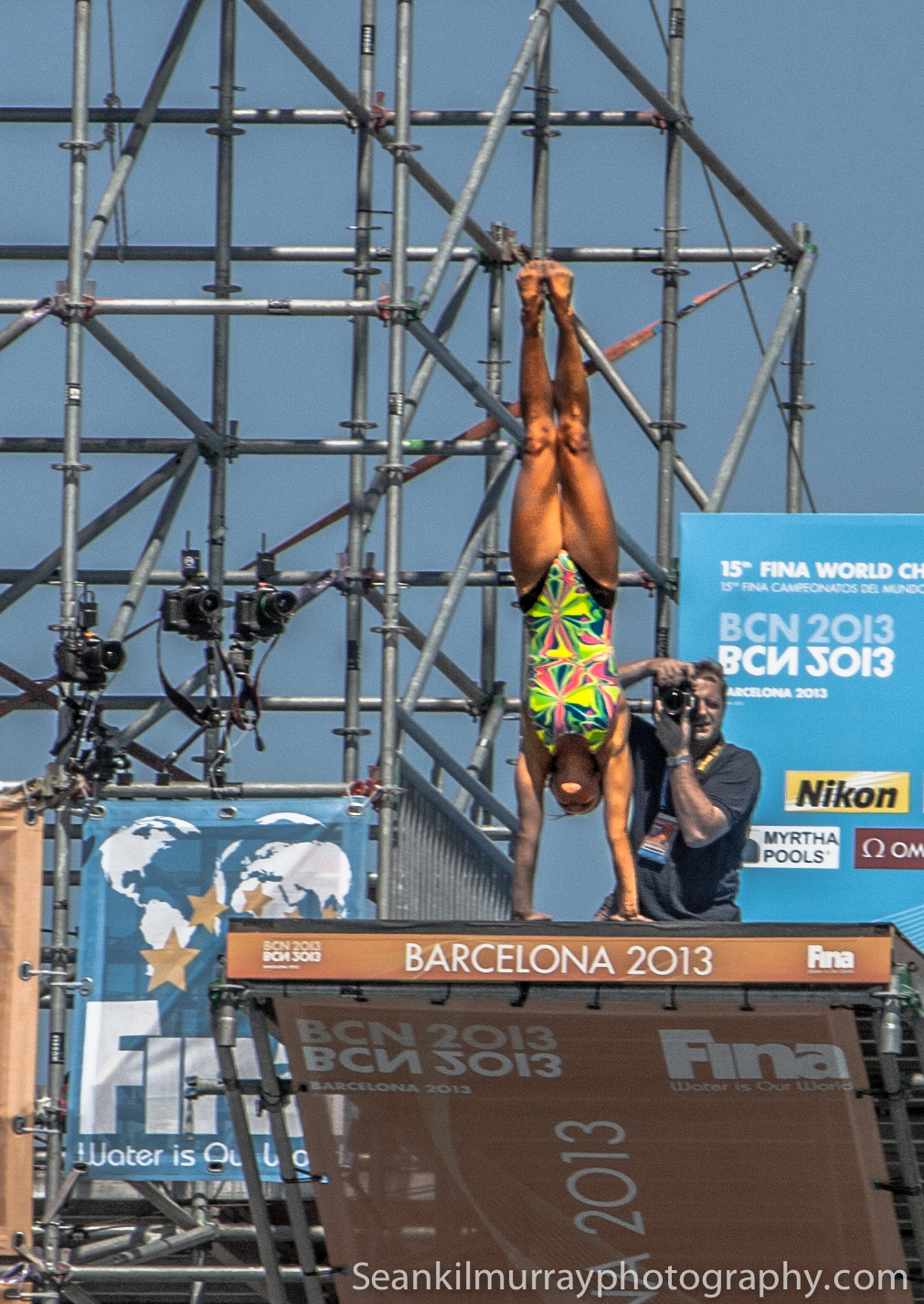
Timing is everything. Our stay in Barcelona overlapped with the biennial World Swimming Diving and Water Polo Championships and we were lucky enough to see parts of the first ever High Diving competition. Until this summer, the Olympics and worlds have just included spring board and 10 meter platform diving. In Barcelona, the women went from 20 meters (65+ feet) and the men from 27 meters (90 feet). Here is  Gold medal winnerget-attachment-4 Orlando Duque from Colombia on his way down during a practice day,  somatic meditation in action. Although new to this championship, Orlando has been high diving for 15 years and can be seen on the Red Bull Diving circuit, (coming to Boston and the ICA later this month.)  get-attachmentAnna Bader of Germany won the bronze, but this was a moment that had everyone gasping. Just a simple handstand on the edge of a 65 foot drop. She walked to the edge, planted her hands, and lengthened into a deep uttanasana. She then went up effortlessly, locked it in for a good 10 or more seconds, wind blowing, cameras flashing, and then pushed off and flew. Amazingly exciting to watch that level of integration.
There are blessings, nourishment and cosmic delight everywhere, but our week in Barcelona provided an extraordinary abundance. These were just a few. Hope you get to visit some day.

Thanks to Sean Kilmurray for the photography.

Wag More, Bark Less

e0a8c1bfc9f368802576aa023bc0bf89_1

This is my favorite bumper sticker these days. Many layers of meaning are hidden in this slice of pop culture, especially for the yogi/somanauts moving into the ‘energetic’ and ‘field’ realms of consciousness. Explore these possibilities with playfulness, but feel their depth simultaneously. These energies are very old and well proven through millions of years of experience.

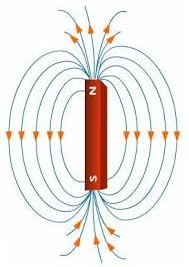
As we see in this picture, the field lines of a bar magnet take on the shape of a torus. (See yoga and the torus.) If we imagine the N pole (not Z) as our head and the south pole as our tail, or images-4the N as the crown chakra opening to the heavens and the S as the root chakra opening to the earth, we find a flowing coherent field of energy. If we can imagine alternating current, with the N and S reversing periodically, we find a more complex field current traveling both directions.

If we transfer this onto the modern human body and its energy field, we will find a hyperactive North pole (the head) and a seriously malnourished South pole, the tail, and very little coherence. Too much talking/thinking/whining keeps the brain too hot. To much sitting, compressing and collapsing keeps the tail stuck and unconscious. In the esoteric teachings of yoga, the kundalini energy is said to be sleeping, like a coiled serpent, at the base of the tail. Wagging more will help wake up this snakey energy and barking less will help pacify the brain, thus bringing more balance and coherence to the human energy field. Lets examine some tails from nature to see if we can learn some ‘waggly’ hints from our animal friends and experience more coherence as a result.

Check out the tri-furcation of the muladhara in this jumping gecko. Full extension backwards of both legs and toes and the tail balance the forward extension of the head, front legs and toes. A powerful coherent field is seen. If humans could find this third pathway, the tail, to supplement to full leg action we would have a way to balance the hyperactive human brain. Notice how the opposite orientations create a dynamic aliveness in every cell.

images-1

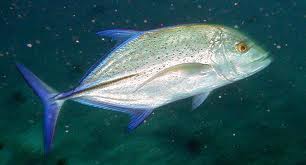
This guy from the jack family has a beautiful blue forked tail. Fish invented vertebrae and thus to be able to move like a fish is to have a very free spinal column. The motor is in the tail, not the head. Make your fish tail undulate from sid to side. Trikonasana and parsvakonasna are good poses to practice the fish tail action as they are lateral poses.

This red tailed hawk uses her tail to help create stability, to steer, or to help change altitude. Although we don’t fly, whenever we use our arms we can widen our tails to help maintain an energetic balance. Birds can fan their tails which is a totally cool thing to do. Work on this any way your imagination allows.

Our dolphin friends use their tails to launch themselves through the water and air. As they are mammals, their concentrated power creates elegant flexion/extension waves. Forward and backward bends will feel more open and effortless when the tail is free to use its power and the rest of the spine can be more receptive. Most of us way over-use the spinal muscles. Be more dolphin like in these poses.

The kangaroo shows how the tail allows an amazing balance in the spinal energy, freeing up the head to see, smell and eat without any creating any unnecessary tension in the neck. Energy does not get stuck in the hips either because of the tail support. Grow your self a kangaroo tail and feel where it can take you. Feel the muladhara opening and breathing. Drop your brain and rest in the infinite spaciousness of the heart.

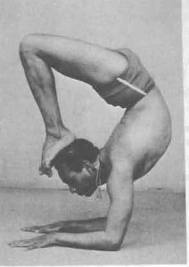
Finally, our friendly scorpion shows us how to really extend the spine. This is crucial for backbending as most of us constrict the root of the spine in an attempt to open the hip joints. Notice his spine extending through his tail.Unknown-3

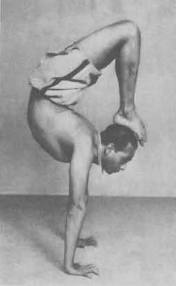
Here is B.K. S in two variations of the scorpion. Notice how he uses his legs as an extension of his tail to create length. He also lengthens through his crown chakra as well to complete the circuit.Unknown-4 What is extraordinary about Mr. Iyengars backbends is the clarity of the core line. Follow the curve from knees to the root of the jaw. Simple, elegant relaxed and open, just like the scorpion. Be careful in practicing this pose. It can sting!

Yoga Lessons from Seaweed

Sthira sukham asanam, the somanaut’s basic mantra, appears in Patanjali’s Yoga Sutras in II-46 as his first of three sutras on asana or yoga posture. In Patanjali’s time, yoga pose referred to any posture used in sitting meditation. In modern times asana has come to mean any of hundreds if not thousands of possible configurations of the human body, some meditative, some gymnastic, many therapeutic.

But what if we go back to the origins of life and the emergence of multi-cellular beings? What would it feel like to inhabit the newly emerging forms appearing on a watery planet? No bones. No nerves. Just a self-organizing aliveness of fluid, tissue and intelligence that has been carried forward into our emerging moment in our own human cells and tissues. Sthira sukham asanam: embodied living requires a dynamic balance of stability and mobility throughout all cells and structures. The imprinting of sun, of ocean waves and swells, of rocks, shaping minerals and cells into undulating intelligence, surviving the pounding surf by anchoring to rocks and learning to go with the flow. Nature is shtira sukham and one of her oldest and most prolific expressions is seaweed. Can seaweed help us awaken this primal intelligence and bring it into moment to moment awareness?

The Department of Biodiversity and Conservation Biology at The University of the West Cape, South Africa offers: ” The term seaweed refers to the large marine algae that grow almost exclusively in the shallow waters at the edge of the world’s oceans. Seaweeds are plants because they use the sun’s energy to produce carbohydrates from carbon dioxide and water (this is called photosynthesis). They are simpler than the land plants mainly because they absorb the nutrients that they require from the surrounding water and have no need for roots or complex conducting tissues. Some large seaweeds such as the kelps (see above) have root-like parts called holdfasts, but these only serve to attach them to the rock. Most seaweeds have to be attached to something in order to survive, and only a few will grow while drifting loose in the sea.

Three groups of seaweeds are recognized, according to their pigments that absorb light of particular wavelengths and give them their characteristic colors of green, brown or red. (Red dulse and brown alaria to left.) Because they need light to survive, seaweeds are found only in the relatively shallow parts of the oceans, which means around the shores. Here they occur in a variety of shapes and sizes, from the large kelps (certain brown seaweeds) that form forests on temperate (cooler) coasts, to the hard “encrusting corallines” that look like pink icing, but are so important in building and cementing coral reefs in the tropics. Some seaweeds, especially many of the larger reds, are showy and attractive, while others may be small and inconspicuous, and grow in a low “turf” on the rocks.

This past weekend, the cosmos, speaking through my dear wife Kate, sent me (along with Kate and Sean) to hang with the “Seaweed Man”, Larch Hanson, his delightful partner Nina, five seaweed harvesting apprentices, and various visitors to seaweed heaven. (Here’s Larch with digitata, a kombu like plant.) Located in Steuben, Maine, north of Bar Harbor, ‘Maine Seaweed’ is action central for anyone wanting to awaken their own seaweed consciousness. If Larch is seaweed incarnate, I want more of what he has! Forty years of living in the sea, on the sea, with the sea, has imprinted into his cells the rhythms of the seasons, the oceans, tides and winds. He is an experienced carpenter, boat builder, structural integrator, poet, practicing Buddhist, and philosopher. He invites visitors and prospective apprentices in the summer to learn about awakening while feeling the depths of oceanic consciousness.

From Larch’s website: “Through seaweeds, the earth’s sea-blood strengthens our own sea-blood that we carry within us. Seaweeds are an excellent source of trace minerals in our diet. As our air and water become more acidified through pollution, minerals are leached and depleted from our land fields, and they wash down to the sea, where the wild seaweeds incorporate them. When we eat seaweeds, we take these minerals back into our bodies, and these minerals help us maintain an alkaline condition in our bloodstream, which is a healthy condition, resistant to fatigue and stress.

Seaweeds have admirable qualities: they are flexible, they are tenacious, they are prolific, and they are the oldest family of plants on earth. These plants link us to the primitive vitality of the sea. They strengthen our own primitive glandular system and nervous system.
An average family of seaweed eaters will consume a Family Pack within six months to a year. That’s 3 pounds dry weight = 30 pounds wet weight = one bushel of wet plants. This is a very concentrated food.

Don’t fear salt. Salt is necessary to life. If you are willing to sweat, you can move salt through you, and in the process, you will be actively creating your life and your dream from the universe-intelligent structures of the complex salts and trace elements that are available in seaweeds. Your body is an antenna, and your body can’t receive and comprehend the whole message from Universe unless it contains all the trace elements of the Universe. Quality counts more than quantity. If you eat the more complex salts of seaweeds, you will have less craving for simple junk food salt, and you will find yourself becoming more whole, satisfied and healthy.”

So, I offer to you, “Pass me the dulse!” (the red seaweed above the alaria in the upper photo). My inner ocean is ready to awaken.