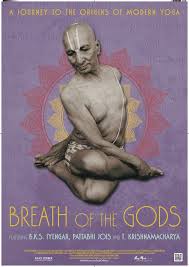
Breath of the Gods

UnknownBreath of the Gods is a documentary by a German film maker (now available on Netflix) who sets out to discover the origins of modern yoga postures by exploring the life of Tirumalai Krishnamacharya, teacher to the big three in modern hatha yoga; Pattabhi Jois of the Ashtanga Vinyasa line, TKV Desikachar, a son of Krishnamacharya and linked to  Viniyoga, and B.K. S. Iyengar, brother-in-law of Krishnamacharya. It is quite amazing to see the three totally different and amazingly popular approaches to teaching the postures that grew out of Krishnamacharya’s yoga school.

Pattabhi is down to his last few months and diesUnknown-1 during the filming, but we do see him reminiscing, discussing yoga, and instructing a group class to get a feel for his presence. Unfortunately, Desikachar, whose style is probably the closest to that of Krishnamacharya in his later years does not appear at all, possibly because of illness; but the youngest of Krishnamacharya’s sons, T.K. Shribhashym, and two of his daughters, Alamelu and Shubha are wonderful at helping articulate their father’s teaching methods and how they evolved. Shribhashym has a big role in the film and helps us realize his father’s impressive dedication to reviving hatha yoga in India, in spite of the total lack of respect accredited to ‘yogi’s.
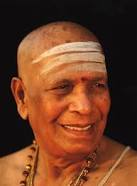
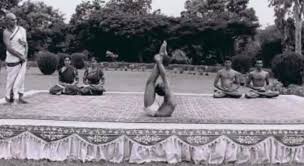
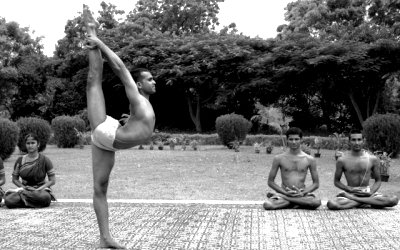
There are several archival segments of Krishnamacharya, Iyengar, Alamelu and Shubha, images-1some familiar to those who have seen the 1938 practice that has been around a while, and some new. There are also some ‘reconstructions’, modern enactments of actors pretending to be Krishnamacharya and his students, but these actors are ‘eye opening’ in the ease in which breath of the godsthey perform some very advanced yoga poses. Try this padangustha dhanurasana on for size! Or this natarajasana!
 

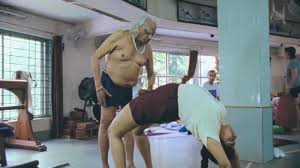
Iyengar is, of course, a scene stealer and gets lots of face time. He talks about his relationship with Krishnamacharya, (no new ground here), and how he learned to teach himself the poses. images-3 You also see him practicing amidst the chaos of the Pune studio, and the some of the best parts are when we watch him teach. Follow as he instructs his granddaughter in a twist to differentiate between the object (the outer aspect) and the subject (inner aspect) of the pose. In urdhva dhanurasana, watch him help her find the height in the pose from the DFL (deep front line) by using the ankles. From the other end, extend through the armpits, do not force the wrists. In teaching the director sirsasana, he show how to ground the wrists and lift through the twin pillars of the side bodies activated by the leg action. It was almost painful to watch, knowing he is no longer here.
If you have more than a passing interest in the modern yoga scene, this is definitely worth a look.
2014 YLT: 7th Weekend Summary

Opening Meditation: Sitting in Silence: Accessing the Source

Primary Theme of Weekend: Fluids, Fascia and the Living Matrix
We explore, through movement, visualization, breath and postures, our billions of years old liquid intelligence. We are blessed to live on a ‘water planet’. This miraculous substance, infinitely mysterious and yet immediately accessible to perception, is the foundation for life, aka movement. What happens when it begins to awaken???

images-2We begin the second half of the course with a quick review of first half of the course:

Continue to clarify, differentiate the two perspectives available to the human mind, and integrate as Non-Dual Understanding:
1: Resting in Silence/Purusha/Now/Pure Awareness;
2: Monitoring and modulating flow of energy/information/Prakriti, as it manifests through: the three bodies, gross, subtle and causal, and the ongoing unfolding of Karma, at all levels of the cosmos.

Gross body awakening:
1: Find the deep front line, as articulated in Tom Myers’ “Anatomy Trains” model.
2: Continue to practice the three primary movements of the pelvis turning over the femurs, and the spinal column: mammalian flexion/extension, lateral flexion/extension or ‘fish body’, and rotation or spiraling; through the practice of the standing poses and dog pose sequence.
3: Refine upper limbs: wall tadasana, dog sequence into inversions: Learn to protect and stabilize the vulnerable regions of the shoulders.
4: Beginning back bend sequence and variations: sphynx, cobra/up-dog/, bent leg spynx and cobra, ustrasana, dhanurasana, salabhasana
5. Setu bandha on blocks to refine cranio-sacral action and open liver/kidneys/spleen
6. Breathing: Viloma to differentiate ribs and diaphragm: ribs-opening-inhalations; sustain and diaphragm stretching-lifting, abdominal toning exhalations: sustain
7: Anything else that inspires you…

Subtle body awakening:
1. Work with imagination to support perception when awakening new areas
2. Develop sustained and flexible attention: wheel of awareness, attention moving in and out of portals of perception, resting in stillness/awareness of awareness in between.
3. Get to know the voices/parts that are aspects of your ahamkara/self sense. Let “Higher Self” integrate, organize, mediate, etc.

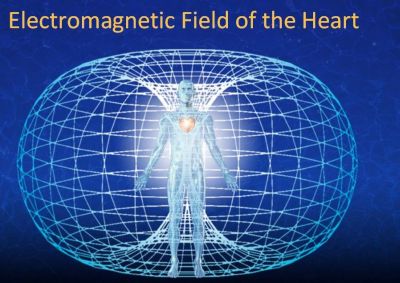
Causal body awakening: Practice imagining/feeling the toroidal field of the heart.

Review of voices: Any new ones emerging? Any old ones re-emerging, re-organizing?

New Material: Working from heart energies: Visualiizing heart center and navel center as origin points for spheres of energy and organizing intelligence, and then moving/supporting the body from these sources. We will starting from the beginning, as a cell, as an embryo, as an infant discovering inner movements.

Finding Fluidity: Rolling and Pouring: Unknown-3
Saturday: Explore ‘rolling and pouring’ from “How Life Moves” by Kevin Frank and Caryn McHose, pg 29,
then play with the spiral transitions to standing and walking.

(Sunday: Same as above, only add ‘hu breath’ from Emilie Conrad, to amplify fluids and proprioceptive sensitivity.)

Bringing this liquid awareness into asana practice:

Any and all standing poses, plus: from ardha chandrasana, to one leg dog, to one leg uttanasana, to hand stand and sirsasana, coming up from extended leg, to one leg setu bandha and urdva dhanurasana, finding inner extension and lift through flow rather than outer muscular contraction. Add any poses or sequences from above to your investigation.

Unknown-2First Video: Saturday PM
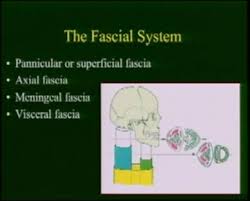
The Four Fundamental Layers of Fascia by Frank Willard
(from the 1st International Fascia Research Conference, 2007)
1. Superficial or pannicular (tube, just under skin, surrounding all other tubes)
2. Axial, including epaxial and hypaxial ( from notocord – surrounding muscles of front and back body, extending into limbs. Does not extend over skull as superficial does, but stops at base. Menningial extends inside skull
3. Visceral (from mouth to anus along midline and extending out around each organ)
4. Menningial: From inside of skull down spinal canal to root of spinal column

Take home points:
1. These fascial layers are continuous throughout the body and not divided into separate images-3parts, as the anatomy books imply. Find them as fields of perception/proprioception.
2. Key areas of the body where the layers overlap include sacrum and cranium
3. Visceral fascia connects with Deep Front Line and is crucial in our asana explorations

Second Video: Sunday PM
Strolling Under the Skin”: also (Part 2) French hand surgeon uses ‘in vivo’ micro camera to capture the water-collagen matrix in its amazingly complex dance of balancing stability and mobility through tendons, organs and all tissue structures, demonstrating ‘tensegrity’.

Take home points:
This ‘microscopic and molecular level view allow us to see, and thus begin to visualize, the inner world of fluids and collagen fibers that make up the lattice/3-D spider web we call the ‘living matrix’. Keep finding/feeling, exploring from this level, 24-7-365.

Topic for next session:  Embryology

2014 YLT 1st Half Summary

imagesGeneral Principles:

1. Establishing Presence, Opening the Heart:
How can we practice ‘Presence’, stabilize our awakening, realize the unbounded present moment, silent and still, un-graspable and yet, ever available, and rest here, abide here, as the world of form, the manifest universe, unfolds in its own way, in its own time; and from here allow the heart to open into its natural fullness so we can engage our karmic path with both wisdom and compassion.

2. Learning the rules of the world of form, as expressed in: the yin and yang, the tamas, rajas and sattva, the balance of opposites.

3. Studying the nature of the gross body, matter, the sthula sharira, through gravity and weight, muscle, bone and connective tissues, anatomy and kinesiology; using Tom Myers’ ‘Anatomy Trains’ model and other fascial continuities that link movement and perception, and enhancing perception and sensitivity through the practice of yoga postures and flow, gestures and movement.

4. Investigating the level one of the energy body, the physiological or pranic realms through breath perception, observation, and guided practice of asana and pranayama.

5. Exploring ‘mind’ and ‘mind activity’ as expressed in attention, perception, memory,heart-energy discrimination, identification, discovery, emotions, actions and creativity.

6. Discovering and aligning the energy body with the ‘Cosmic Fields’, using gravity, asana and the imagery of sacred geometry. Building a strong and grounded connection to the ‘Heart Toroidal Field”.

Specific Explorations :
(for the first half of the course; more to come!)

1: Develop familiarity with basic standing poses as ‘tools’ for somatic discovery. These include uttanasana, prasarita padottanasana, trikonasana, ardha chandrasana, parsvakonasana, parsvottanasana, parvrtta ardha handrasana, parvrtta parsvakonasana. Please add your own favorites to this list if necessary.

2. Use these poses to explore the three basic movements of the hip sockets: flexion/extension (or forward and back bending…do not confuse spine with hips!): lateral flexion and extension or ‘fish body’: and rotation or twisting. Again differentiate hips and spine here.

3. Practice dog pose and all variations, including ‘flipping’. Learn to art of ‘double action’ or opposite extension.

4. Grow yourself a tail and use it in all poses to ‘trifurcate’ the mula or root chakra energy. From dog, begin with simple inversions and add sirsasana and sarvangasana when ready. Also simple back bends (sphynx, cobra, up dog, ustrasana, and twists.

5. Become familiar with the ‘Deep Front Line’ of the Anatomy Trains lines. Find it feel it, work from here, integrate perception, stabilize your presence here.

6. Learn the role of props as tools to provide support and leverage to help open up the body. Blocks, belts, bolsters, blankets, weights (sandbags or barbell plates) and chairs are the main ones. Foam rollers and therabands are also wonderful tools. Use for supported bridge and variations to refine double action, aka integrating prana and apana.

7. Patanjali’s Yoga Sutras: First Pass: get a feel for the structure of the book, the nature of sutras and the different types of information conveyed. Next: Choose a 12 or so key sutras, ones that you can work with. Include as essential I-2 – 1-4, II-46 – II-48, II-1 and I-33. Live with them. Sleep with them.

8. Read some Dan Siegel to get a sense of interpersonal neuro-biology and modern neuroscientific models of mind. What is neural integration and how does that relate to yoga? What is emotional self-regulation?

9. Observe your own ‘ahamkara’, the I making’ aspect of mind activity. Shift it from ‘identifying with’ the thoughts, ideas, beliefs and objects in the mind to ‘spacious emptiness’ aka presence. Make friends with the many ‘voices’ or ‘parts’ that have important roles to play in mind. Create teams of parts that can complement each other as they perform their duties. Just be clear that, although they may pose as “I”, they are imposters. “I AM’ is limitless, luminess emptiness…

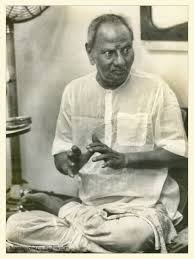
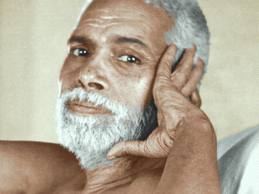
10. Listen to ‘awakening teachers’ through their cd’s (‘Sounds True‘ has an extensive collection), or even better, live and in person.images-1 Read their writings. Soak it in until awakening becomes second nature. Then keep re-minding your self, ‘stay awake’, ‘stay present’. The reminders are everywhere! My personal living favorites are Adyashanti and Eckhart Tolle, but there areUnknown many awakening teachers out and about these days, each with their own unique gifts and gaps. Ramana Maharshi and Sri Nirsagatta Maharaj are two giants of the last century.

Advanced Practice:

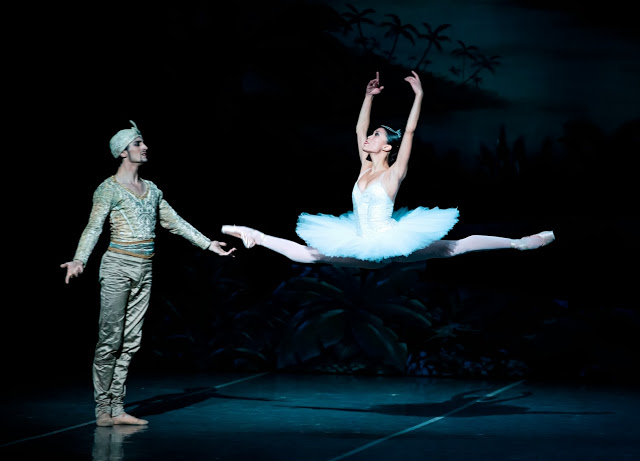
Shades Pas De Deux_Gene Schiavone

Work on your levitation.