


Although the word ‘soul’ is used in many fascinating, confusing, and contradictory ways, soul always seems to imply some form of integration or relationship between the sacred and the profane, the mystical and the sensuous, or to use the advaita terminology, between the formless and the world of  forms. My first ‘felt sense’ of soul came from the Soul music that arose in the 1950’s and 60’s, combining elements of Gospel and its spiritual aspirations with the more sexual/sensual Blues. Nothing better than feeling the presence of Jesus through all the chakras! Thank you Sam and Dave! This made a whole lot more sense to me than the Catholic image of soul as an ‘untainted purity’ that was continually being stained by unending chain of sins, and had to be constantly cleansed by some priestly dry cleaner. My soul wanted heaven and earth to dance together as one. But what exactly is the soul?
The outer, objective world of the senses is relatively easy to describe. We can see and feel oak trees, ocean waves and fire. Finding words to articulate the inner subjective world, the domain of the mystic, the shaman, the poet and the somanaut, is much more difficult, but soul is a word seemingly used by everyone. Soul has recently returned to my vocabulary as three very different perspectives on soul have been offered to me and I am digesting, integrating and hoping to incorporate them into my teaching on the spiritual unfolding currently underway.
Adyashanti uses soul in a very Buddhist/Mystical Christian way. John O’Donohue has a Celtic/Druidic view on the soul, and Hank Wesselman and Jill Kuykendall speak of soul from the Shamanic point of view in general, and the Hawaiian Kahuna tradition specifically.
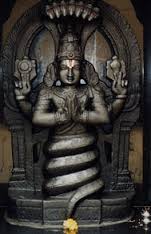
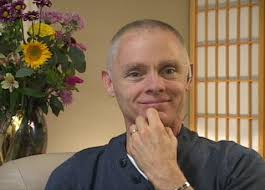 Adya uses soul as a synonym for what in beginning meditation is known as the witness, or witnessing consciousness. For pre-meditation consciousness, awareness and what arises in awareness are confused, or undifferentiated. Entangled in this confusion is also the self identity. I am my psychological content. All the chatter that goes on in the mind is me and this is a highly unpleasant place to be for very long. In level 1 meditation, or mindfulness, we are taught to just notice or be a witness to what is arising in the mind, without getting involved in the story. This begins the teasing apart of Purusha (soul) and Prakriti, creation, that is the foundation of Patanjali’s Yoga Sutras.
Mindfulness is not so easy in the beginning as the mental habit is to react to almost everything that shows up and to totally forget about just witnessing. Restraining the urge to react, what Patanjali calls citta vrtti nirodhah, takes discipline, tapas or abhyasa, and patience. We teach self discipline and restraint to children, so it is a basic human practice in the beginning. Also, beginners on the yoga/meditation path recognize that ‘mind’ is addicted to having ‘some thing’ to grasp as an anchor, or place to stabilize itself. Therefore, a second aspect of beginning meditation is added.
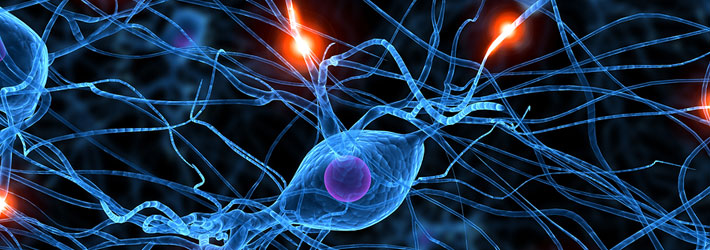
Concentration practice, also known as dharana – dhyana – samadhi and samyama in the yoga tradition, helps root the nervous system in the world of form so it can relax, feel safe, and begin to trust in ‘letting go’ into stillness. The biological instinct for survival does not necessarily trust letting go. If you are a bunny rabbit grazing peacefully in a field, letting go into your bunny bliss may lead to becoming someone else’s dinner. An edge of anxiety and fear, just in case, keep the bunny genes alive. We have to learn to override that instinct to find the depths of our soul.
With time, we eventually begin to recognize that witnessing, or awareness is actually different from what is arising in awareness. We open to a deep, vibrant stillness, unbounded in space or time. We discover eternity as being ever-present. This is what Adyashanti calls ‘soul’ level consciousness. This level can also be called the masculine, transcendent, or formless consciousness and its discovery is the beginning of spiritual awakening. The ‘sacred emerges into conscious awareness not as another form, but as limitless eternity.
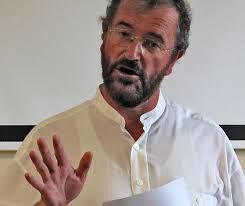 John O’Donahue uses the word ‘soul’ to describe the deep urge of our embodied self to merge with the infinite and links it with the heart. Soul is “a presence from the divine world where intimacy has no limit or barrier.” And as it is linked to the infinite, it can never be truly captured or held. “All you can ever achieve is a sense of your soul. You gain little glimpses of its light, colors, contours. You feel the inspiration of its possibilities and the wonder of its mysteries.”
In this sense, the soul is not an aspect of the physical world, the world we see, feel and directly contact, but it is in the realm of form, as it can change, mutate, grow and evolve. It inhabits the subtle realm, underground, hidden away. Poet David Whyte defines soul as 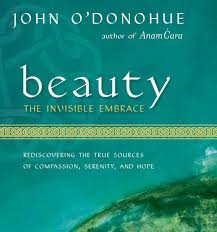 “the indefinable essence of a person’s spirit and being. It can never be touched and yet the merest hint of its absence causes immediate distress.” Depth-psychologist James Hillman adds “the search for the soul always leads into the ‘depths’.” John O’Donohue’s book “Beauty” was written to help nurture the soul. “The human soul hungers for beauty.” And “we feel most alive in the presence of the Beautiful for it meets the need of the soul.” This use of soul is a lot juicier than Adya’s, but Adya uses the word ‘spirit’ to integrate the feminine as a realization of the soul. Same inner experience, slightly different wording.
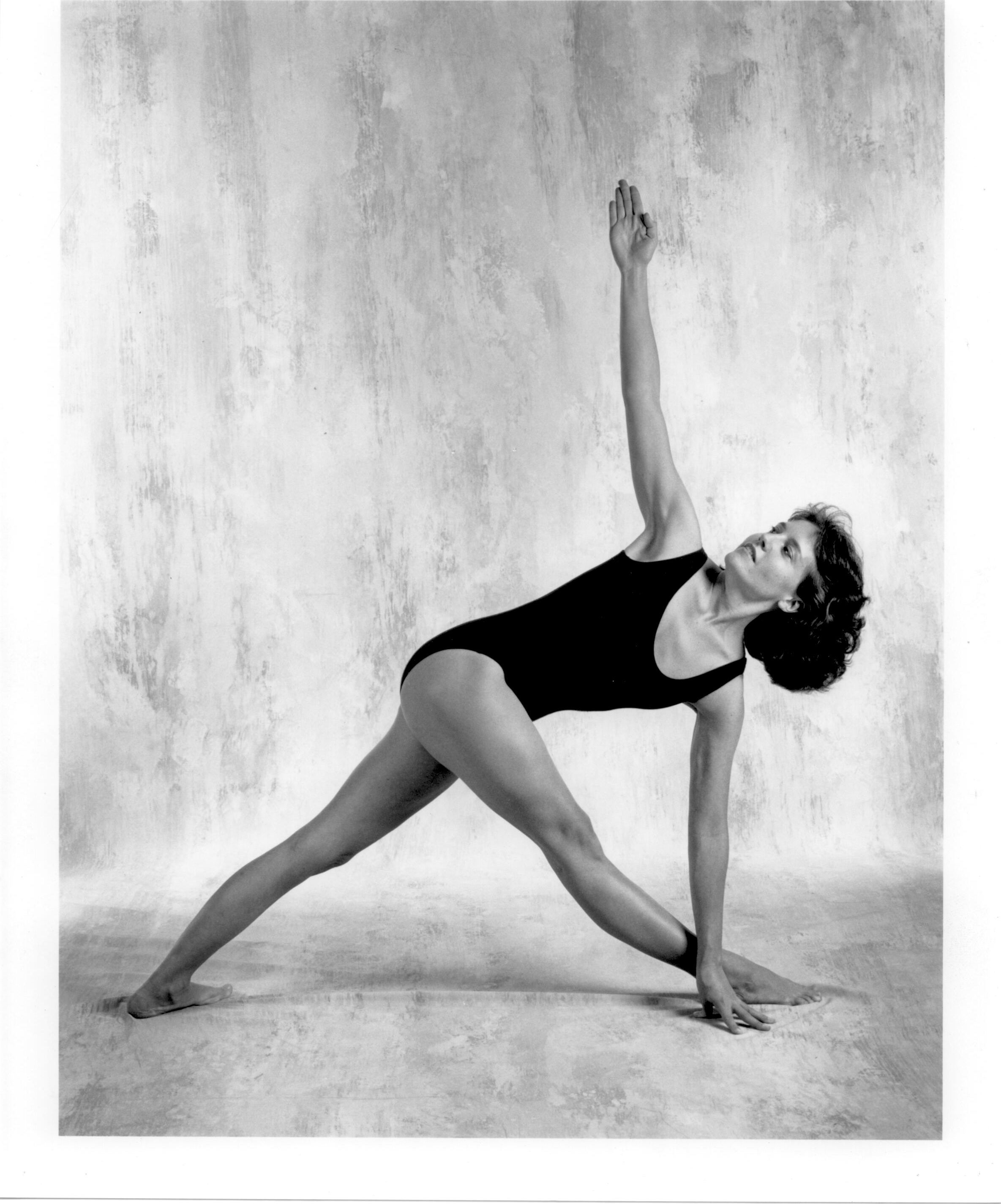
As yoga students and somanauts, we can dive into the depths of our own souls through the water element, the metaphor for emotions, the inner world and the unconscious mind. Poseidon, or Neptune to the Romans has his trident, the symbol of the trifurcated muladhara/earth element, as he prepares to plunge in the depths of the oceans. The unconscious hold our fears and anxieties, as well as our unrealized higher potentials. If we want to wake up, we must take the plunge and liberate the soul from the habit and conditioning of feeling separate and lost. Mindfulness, or the awakening of “soul”, provides swimming lessons so we do not drown during our dives into the inner ocean. Beauty, awe and delight steer the soul safely through the turbulance of our life experiences. Start in the shallow end of the pool, and work your way into the deeper waters. A mindful and juicy asana practice is even better as it will help you become a very proficient navigator of the water element.
The Shamanic world has a complex view of ‘soul’. Although there are subtle variations on soul among various indigenous cultures across the planet, almost all agree that the human has three souls, or three aspects or levels of soul, that are involved in the reincarnation process and our life journeys. The following is from 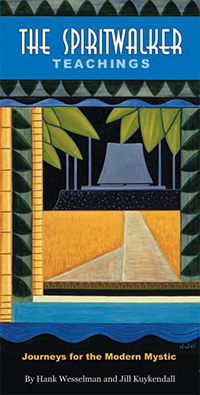 the Hawaiian Kahuna tradition as taught by Hank Wesselman and Jill Kuykendall in The Spiritwalker Teachings. (Kate and I will be diving more deeply into these waters when we study with them in person next month at Esalen. I find their teachings very similar to my own experiences with yoga and lots of fun to play with.
In the Kahuna tradition, the three souls, the Soul Cluster, are the Celestial, The Body and the Mental, and health and well being occur when all three are aligned and working together harmoniously.
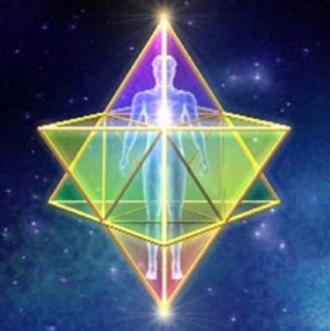
The Celestial Soul, also known as the Spiritual Soul, Oversoul, or Angelic Soul are all names for the Immortal Soul known as Paramatman in the Vedic tradition. It’s essence is infinite light and at incarnation the Oversoul sends a holographic seed of light to awaken and enliven the other two mortal souls. This energy is transferred to the other two souls in the form of breath, or spiritus. Although everpresent, the Celestial Soul remains hidden from the other two until they attain a level of harmonious integration on the mortal plane. Then, seeds of further growth and development can be planted in the mortal souls to bring out higher and higher dimensions of consciousness into the world.
This seed first awakens and engages with the Physical, Earth or Body Soul as breath or prana. The Body Soul comes from two sources, mother and father. Not only do the sperm and egg come together on the physical plane, but also a psychic/energetic field from each of the parents combine to receive the seed from the Oversoul. The Body Soul carries the evolutionary intelligence at a cellular and organic level and handles all physiological functioning, including the urge for continuous growth, healing and development. Memories as well as all of our learned behaviors are stored here. The Body Soul is analagous to a combination of the anamaya, pranamaya and manomaya koshas in the Vedic tradition.
The Body Soul also is involved with all forms of perception, including the inner world as well as the outer. It is always honest, as it perceives without editing, interpreting or assigning meaning. And most importantly for our future explorations, the Body Soul contains the gateways to the inner world of the shaman. Because it is the perceiver, it is the giver and receiver of all shamanic experiences. (This image is from Michael Williams’ web site on prehistoric shamanism.)
Very much like computer hardware, the Body Soul follows directions and can be further programmed and this becomes a possible source of problems, as it operates in concert with the Mental Soul, which has access to ideas, imagination and creativity.
The Mental Soul or Ego Soul tends to remain in the background in young children as they are very much body centered in the early years, but begins to emerge as the child begins to question the world. The Mental Soul is the source of thoughts, creativity and imagination, assigns meaning to experiences, makes decisions and acts to guide the Soul Complex on the life journey. These choices are directed by the beliefs and the self sense that arises in the Mental Soul from our life experiences. This self sense, or ego, (constructed by the ahamkara), responds to both positive and negative experiences. Positive ones build self confidence and a strong sense of personal power, and our life choices flow from wisdom, compassion and creativity. Negative experiences such as various types of trauma can lead to a damaged self sense, emotional pathology, and life choices based on fear, aggression or self loathing. These traumatized belief structures also interfere with the Body Soul’s capacity to sustain health by sending it bad software leading to a debilitation of energy and illness.
The Body Soul can give feed back to the Mental Soul about these imbalances, as it is always honest. But the Mental Soul, in its creativity, can lie to itself. It can distort the direct information the Body Soul to sustain its own belief patterns. The question for healing becomes how do we begin the allow these two Souls to work in synchrony? The Mental Soul has to learn how to listen objectively to the Body Soul, to trust it’s information, and to discover the inherent power in the physiological wisdom that is at the heart of the Body Soul. A key aspect to the wisdom of the Body Soul is the Shamanic Gateway, and we will go into this in more detail in a further posting. When the Body Soul and Mental Soul are in synch, the Oversoul can be seen and heard, and the next level of spiritual growth can proceed.