

Patanjali on the Energy Body:
Monitoring and Modulating the Flow of Prana in Yoga Practice
How can we learn to feel, see and act from the energy body, where the quality of the flow carries so much information? As far a bio-mechanics are concerned, specifically the action of muscles and bones, we want to, as Ken Wilbur would say, transcend and include. Working from the energy level refines the bio-mechanics because it dives into the cellular and organ support underlying the muscles and bones. We want to feel organic, in movement and stillness, not mechanical. There are three principles we can draw upon from yoga to help us find our way here.
Step 1: II – 46: sthira sukham asanam
Patanjali gives us a huge clue, one that is the foundation of all life forms, including the human. How does life balance stability with mobility? Stability without mobility is rigidity or stagnation. Mobility without stability is chaos, and although some chaotic states can be a very powerful way of shaking up stagnation, a return to some level of order is essential for life processes. When stability and mobility work as a single intelligence we have creation and the emergence and unfolding of the Universe.
What does it feel like when a body is both stable and mobile? What does it look like? Aren’t these two contradictory? As students and teachers of a somatic discipline like hatha yoga, these questions are key. We all know this intuitively, as this intelligence is already embedded in the cells, organs and blood flow, but we often forget, or get distracted from feeling directly by various thoughts, ideas and beliefs. We must learn to trust our instincts and our inner capacity to know. We must expand our capacity to perceive energy flow in the body/mind and begin to discriminate between healthy and unhealthy actions. When our organs of perception, and our intelligence are linked with the organs of action in a yoga posture or exploration, that is known as samyama, or samadhi in action.
If we watch highly skilled athletes , we can learn to see ‘sthira sukham‘ in action. This trains the eyes as well as our mirror neurons. Athletes have to be able to move, sometimes suddenly, and often in complex ways. They have to be able to change direction fluidly while tracking the world around them, and still maintain balance and control of the body. Their actions have to be integral to the changing environment that surrounds them, as well as the changing internal environment of the body. In endeavors like surfing or skiing, the body is relaxed and responsive to the flow of the wave or slope. In others, you are responding the the movement of a ball and opponents. In all of these, transitions, where one type of stability shifts to another, determine the quality of the flow. If you lack stability, you lose you balance. If you lack mobility you get stuck. Your transitions are awkward or non-existent.
The term ‘stability’ here refers to the capacity of the body/mind to retain it’s integrity while undergoing constant change. Integrity, the state of being integral, means operating as a single whole individual, even while arms and legs and torso may be required to move differently. In yoga it is the buddhi, the ‘organ’ of intelligence. (The buddhi is an ‘energy body organ’, not a physical body organ, although neurons are certainly involved.)
How does this relate to hatha yoga ?
Step 2: We add another clue from Patanjali, the gunas, discussed in the Sadhana Pada . These are the three qualities of energy know as tamas, rajas and sattva. Tamas is the tendency to remain the same, or Isaac Newton’s inertia of rest. Rajas is the tendency to keep moving, Newton’s inertia of motion, and sattva is the state of perfect balance, where movement and stability support each other, rather than conflict with each other. This the fundamental balance of the universe at all levels. When tamas is not in balance, stability becomes stagnation or dullness. When rajas is out of balance, mobility becomes instability or chaos. But when these are in balance, there is harmony. This is our goal in yoga. To facilitate harmony in mind and body, spirit and soul, movement and stillness.
The automobile is a useful metaphor for this. Tamas / stability think brake pedal. Rajas / movement think gas pedal. If we need to stop, we smoothly (sattva) release the gas and add the brake. If we need to accelerate, we smoothly release the brake and add gas. It is a dance between the two possibilities. The Taoists call this the balance of yin and yang.
In time, we begin to recognize the difference between an organic state of stability (desirable!) and rigidity (the brake is locked on and won’t let go), or stagnation (the engine is turned off and won’t respond): (undesirable!!) We begin to recognize the smooth use of both pedals, speeding up or backing off to respond the the environment (desirable!) versus the sudden starts and stops that create a jerky feeling. This is true in both movement and stillness.
Patanjali’s very first two practices, given in I-12, abhyasa vairagyabhyam tan nirodhah, teaches about monitoring and modulating how we utilize our innate energies at all levels of our existence. Abhyasa is the conscious and deliberate movement of energy into actions that are desirable for health and awakening. It is continuously stabilizing our integrity as we grow and learn, enabling us to move through the next levels of the awakening without getting lost. Vairagyam involves consciously and deliberately removing or withdrawing energy from habits and patterns that are either no longer effective, or downright harmful. These practices work together as a single process of the intelligence, the buddhi. This true in all aspects of life.
Step 3: Now, to bring it into a fully embodied experience, we discover that what may appear to be opposite actions can actually be felt and experienced as a single ongoing 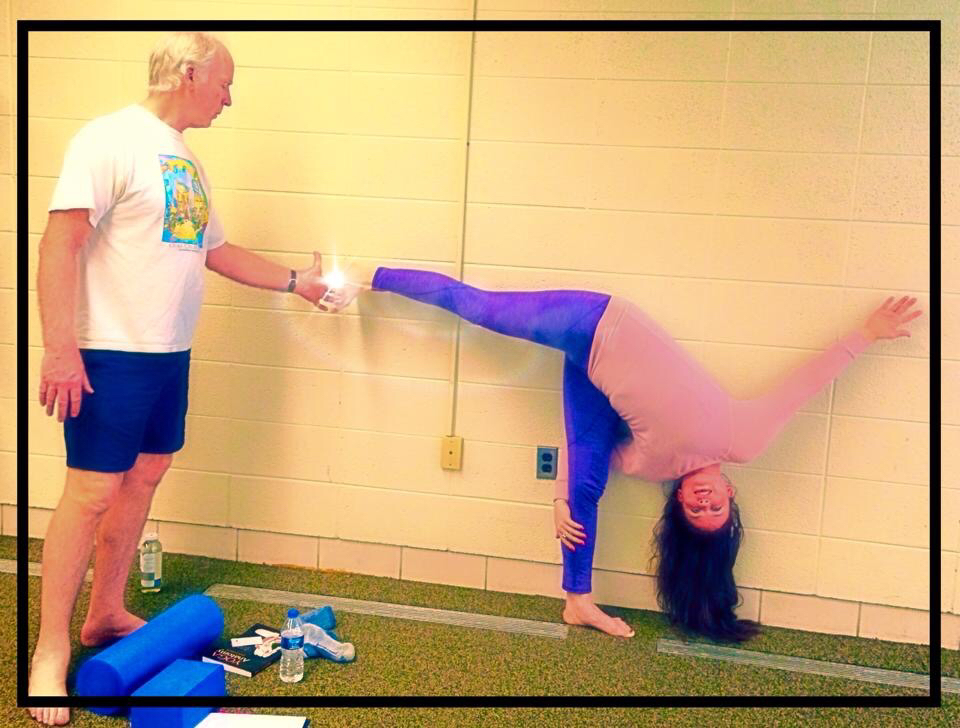 flow. Patanjali says in II- 48, tato dvandvaanabhi-ghaatah; then the pairs of opposites resolve into wholeness. In asana, we discover this at the fulcrum or balance point between two movements or structures. Here in ardha chandrasana, the left of standing leg creates a center line of support from which the back leg extending through the foot, exactly balances the torso extending in the opposite direction. Also her left arm balances the action of the right arm, the tail balances the head etc. To come out of the pose, a major transition, she will begin by grounding a bit more of her energy through her left leg and foot (abhyasa), begin bending her knee just a bit to extend the energy forward and then from the top of the fulcrum in the pelvis balance by reaching back and down with the leg and foot while the torso moves forward and up. She can transition to trikonasana or, even more fun, a one leg tadasana with the back leg bending into the chest.
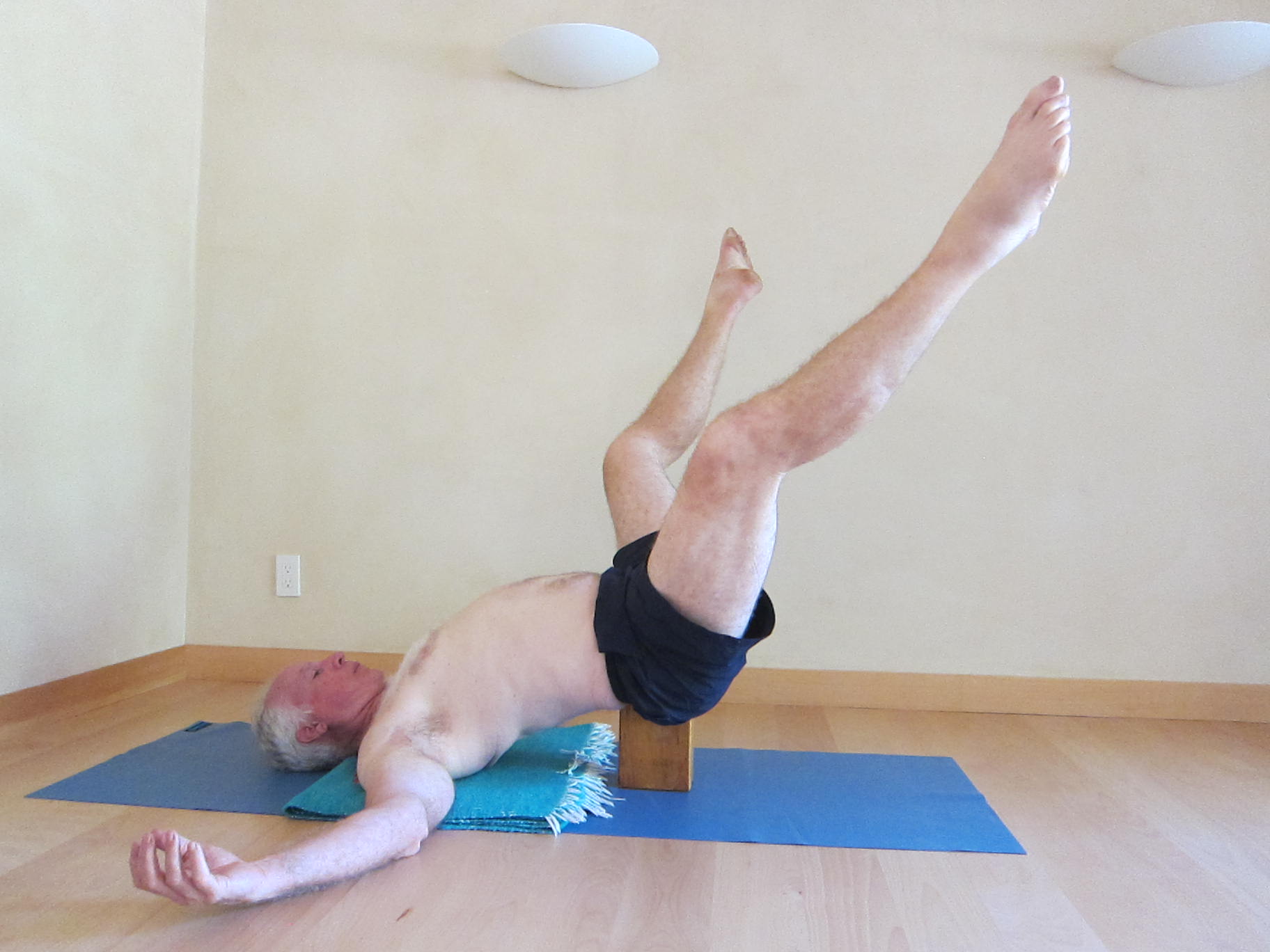 In this variation of supported bridge pose, the block provides a fulcrum to balance the weight and action of the legs with that of the torso and arms. At a more subtle level, each finger and toe can change the energy field, and then we can add kidneys, liver, bladder, heart and more as organizing centers of perception and action. Where in the organic field of the body, in the living matrix of fluid and connective tissue, is there freedom, vibrancy, aliveness, harmony, balance, bliss? Where is there dullness, unconsciousness, thickness, denseness? Where is there aggression, overacting, overly gripping the muscles? Can I move the energies around, through actions of feet, legs, kidneys, liver, arms, fingers, eyes, ears, tongue, skin, integrated through intelligence, to build more harmony (sattva) and less dullness, less aggression.
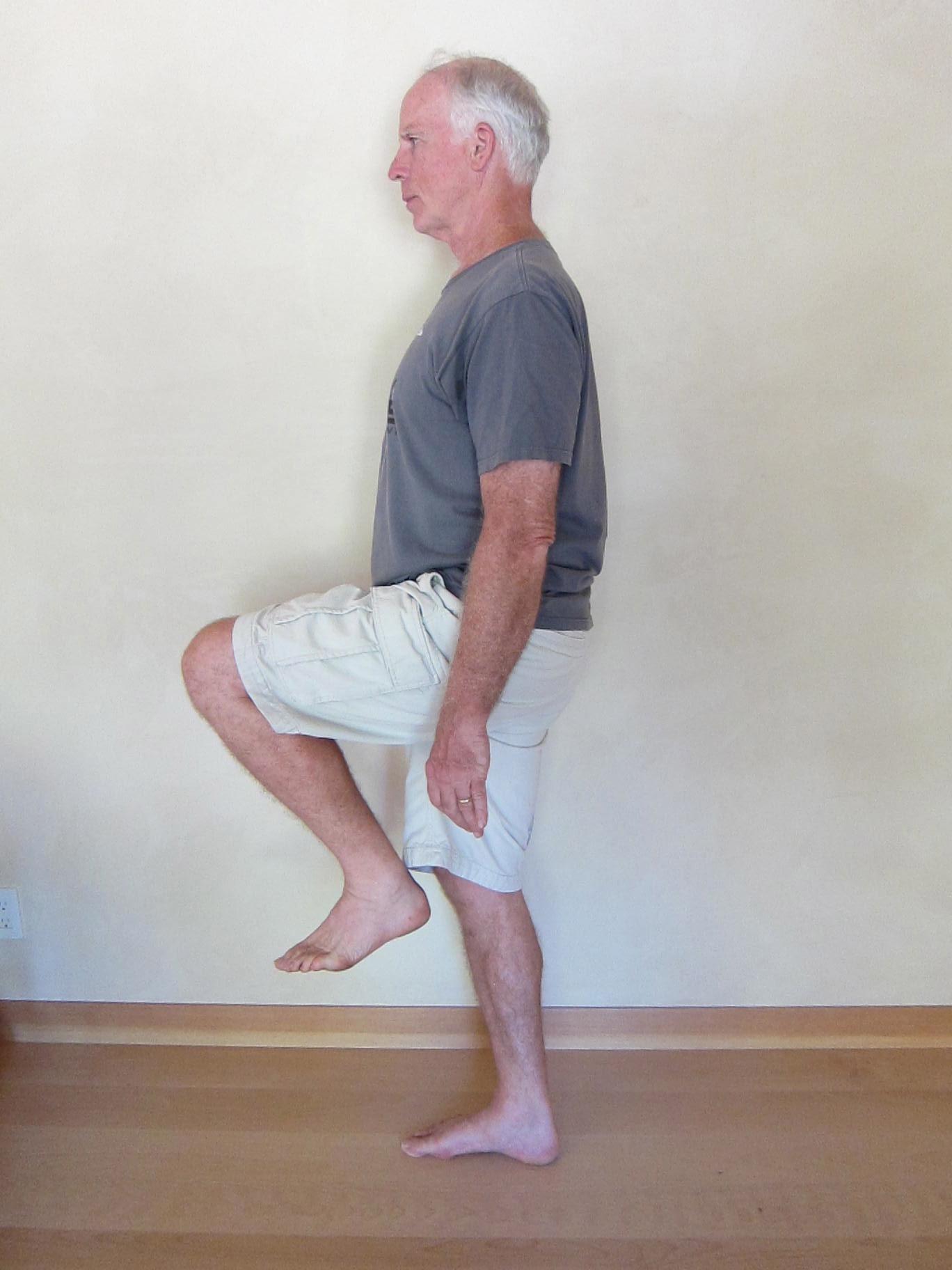 Sliding and Gliding: Option 1
In standing poses, we need to feel that we are in balance, moving in, moving out, or sustaining the pose. As in ardha chandrasana above, there is usually one leg that carries more weight and more grounding energy than the other. They may have to shift. 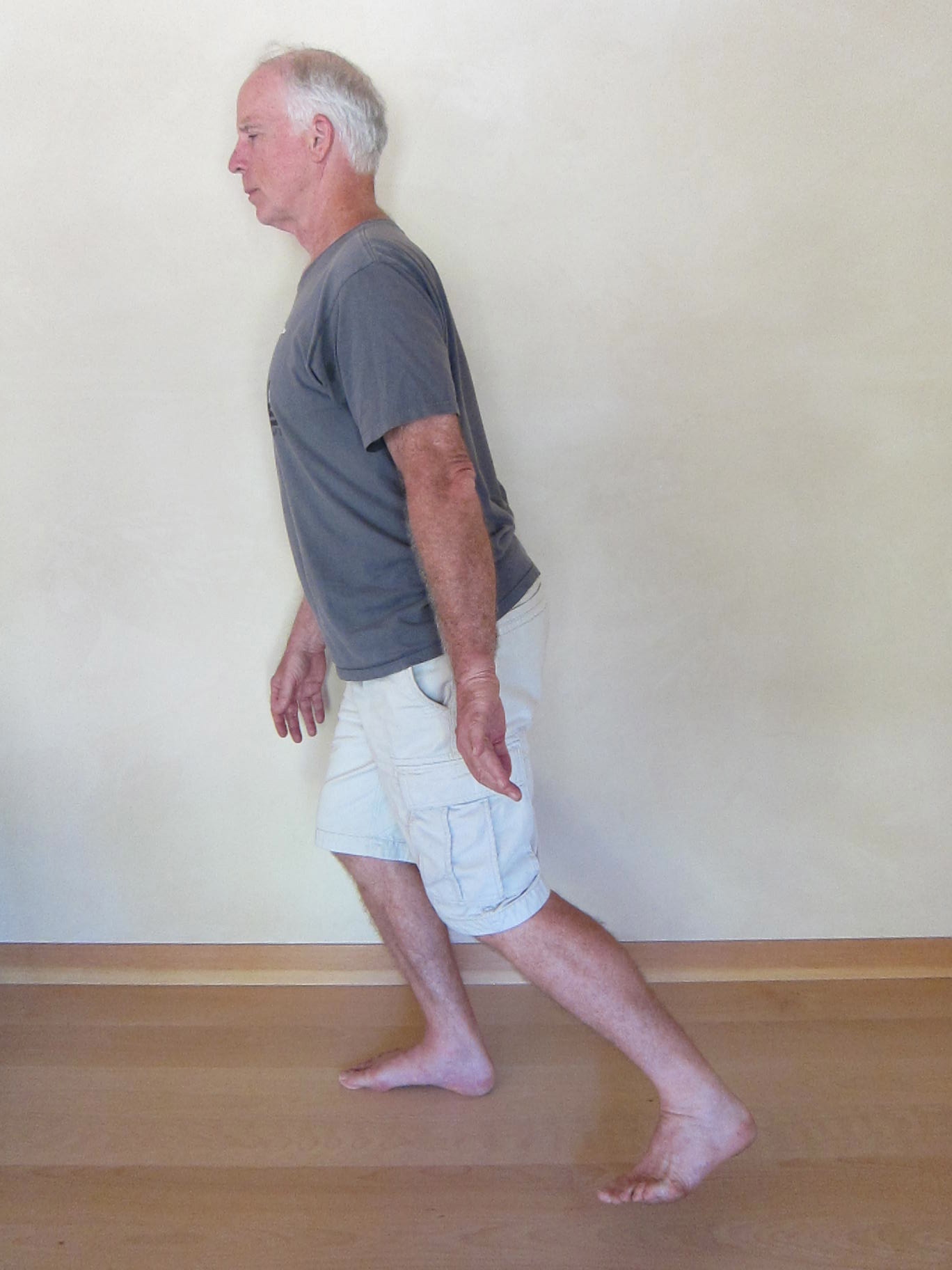
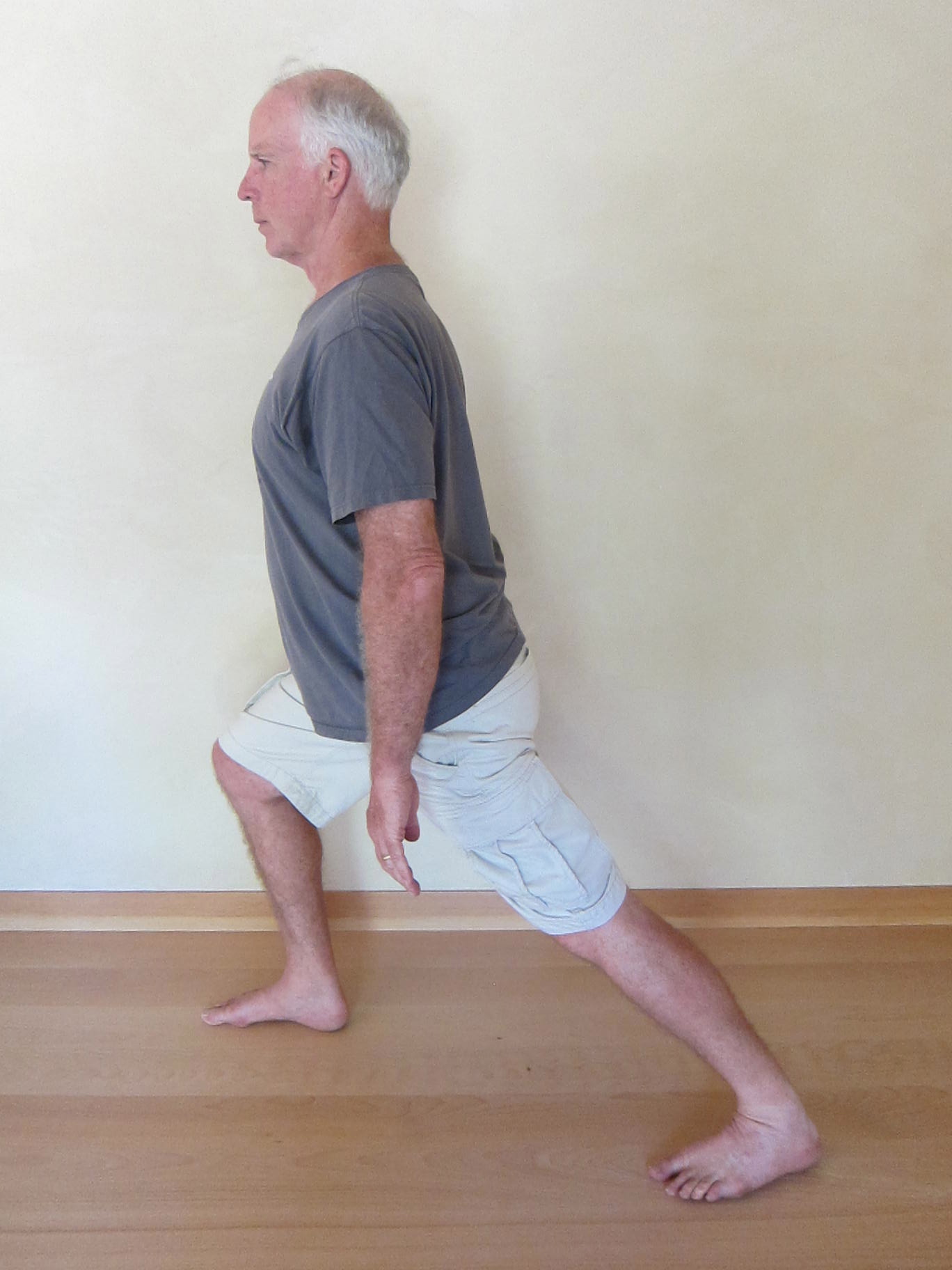 Here is a simple way to play with this. Start on one leg with the other knee bent into the chest. Sitting into the standing leg to ground more completely, begin the extend the bent leg sideways, downward and slightly backward, with a slight internal rotation to keep the DFL (Deep Front Line) engaged. When the leg lands, balance the weight evenly between the two feet. From here you can either shift the weight back to the first leg, or shift to the landing leg and bring the original standing leg to the chest. Reverse.
Option 2: Starting from the same position, extend the leg but do not land, and bring the leg right back to position 1. The weight stays grounded through the same leg all the time. Feel elastic as the legs move.
Option 3: Same as option 2, only alternate legs, so the return leg doesn’t come back to the chest, but becomes the new grounding leg. The legs are probably quite different in their capacities to move and support you.
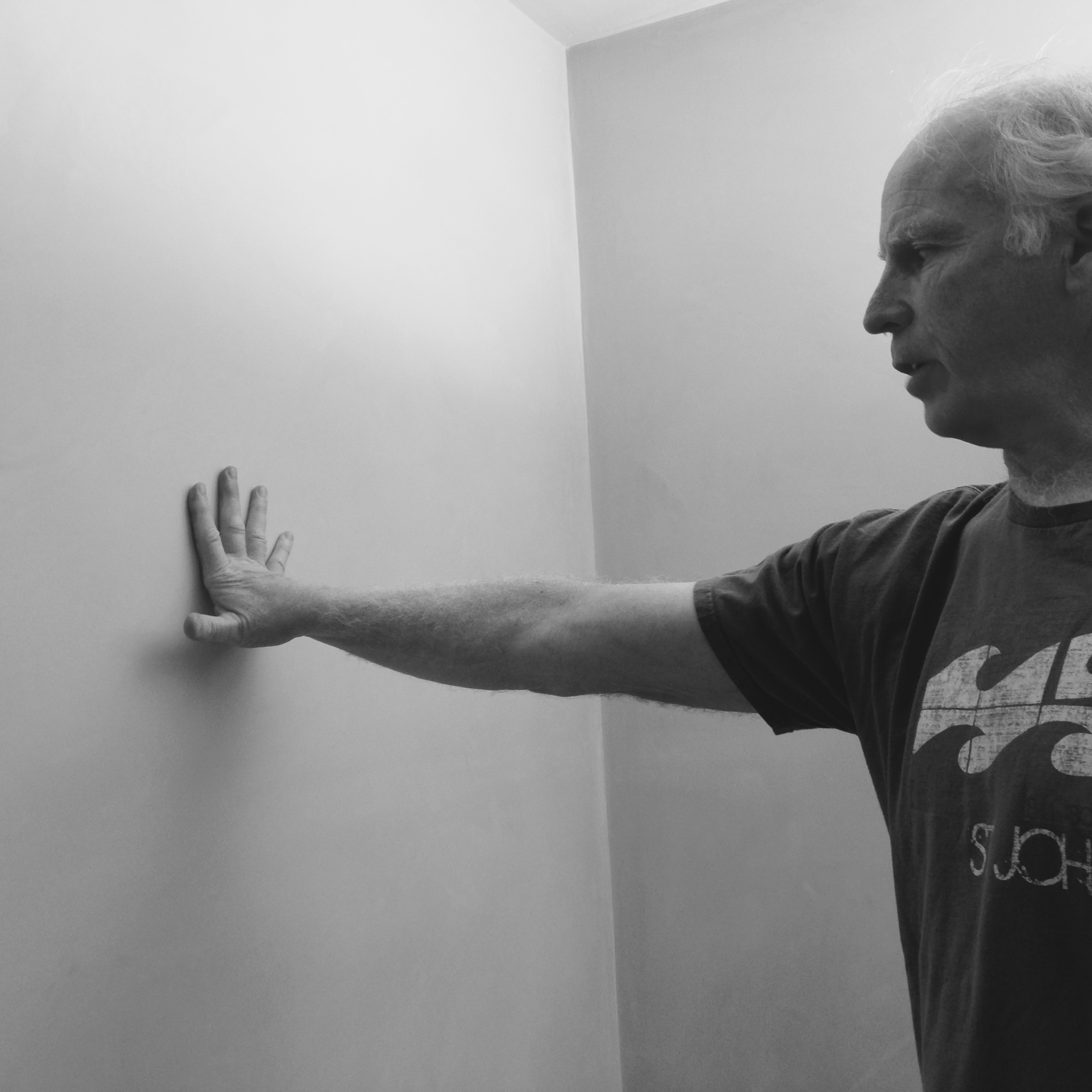 Refining the Articulation of the Arms: Here we play with the dvandvas, the opposite actions to further differentiate the various bones of the hands, arms and shoulders. This will help refine both action and perception throughout the area. There are many steps, but the basic action remains the same all the way through.
To start, find the tips of the fingers, the bones furthest away from the body, as they press the wall. Keep them pressing the wall as all the other bones including torso release away from the wall. From this double action, feel the first set of joints joints opening as perception, as space. Next, add the next set of phalanges. From the second joints, extend into the wall, and release all other bones away from the wall. Feel the spaces opening. 3: Third set of phalanges now join all phalanges to press the wall, all others away. 4. Add metacarpals. 5. Add first row of carpals. 6. Add second row of carpals. 7. Add radius, but not ulna! Radius and all other bones of hand to wall, ulna and all others away. 8. Add ulna, open elbow. 9. Add humerus, open shoulder joint. 10. Add scapula to open AC joint. 11. Add collar bone to open sterno-clavicular joint. 12 Add sternum to awaken ribs. 13. Add ribs to find lungs and heart. This whole process will take 10 minutes or more, especially in the beginning, when it is all new. And that is just one side! After some practice, you will be able to open all the gates more quickly.
Before you do you second side, take time to feel how different the two sides are. Notice quality as well as quantity of sensation/perception and insight. Again, before you do your second side, try dog pose and follow the connections throughout the body.
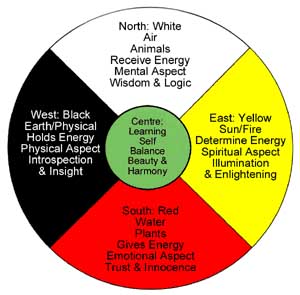
In part 2, we will look at energy from the big or cosmic perspective by exploring balance from the seven sacred directions, North, South, East and West, Above, Below and the Center.