Continuing to Grow

The awakening process is fascinating, to say the least. Never what we might have imagined. Way too complex for that, and the infinite is beyond even imagination. But if there is a constant lesson, it is that awakening requires continuous growth, on as many levels as possible. These include emotionally, spiritually and in the field of expertise used by your soul to contribute to the evolution of the the planet. Another word for growth is integration where new skills and insights continue to feed a deepening complexity in our abilities to sense and respond to our world, as individuals, as communities, and as the human species discovering its place in the great stream of life.

Emotional Awakening

It would be easy argument to say that emotional growth is the most important of them all, as it is the realm of emotional confusion and dysfunction that creates all of the damage and destruction we witness daily here on Mother Earth. And it is easy to do a spiritual bypass where you throw your self so completely into your spiritual practice that you avoid or deny the shadow side of your unconscious. These emotionally traumatized parts of yourself that desperately need to be healed, but are so painful that denial seems a better option, contribute to create suffering for self and others. Communities as well as individuals can suffer from the spiritual by-pass syndrome. All the asana or meditation in the world is not going to help grow the emotional body the way therapy and a relational-field-based inter-personal spiritual exploration will.
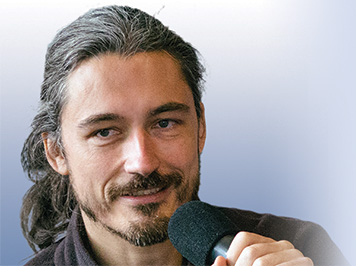
Thomas_Huebl2_356“The internalization of our spiritual practice and the embodiment of a higher consciousness is not expressed in the experimental bubble of retreat centers, but in challenging life situations, in the marketplace, when deployed in areas of crisis, and in the confrontation with poverty, illness and conflicts.” ~ Thomas Hübl


Thomas Hübl is a contemporary spiritual teacher who deeply engages the emotional-relational aspect of ourselves while grounding this in the “Infinite Absolute” of spirit. He brings a mystical fire to his teachings that stems from his own continuous growth and practice in developing a collective planetary and cosmic consciousness. Thomas lives at the ‘field’ level of consciousness, where in his teachings, he connects his students to the ‘relational fields’ and the ‘collective field of information’ ever available to us if we can learn how to access it. He also uses sound in the form of solo or group ‘toning’ to generate sonic fields of coherence and healing. If you want to travel in the fast lane of growth and awakening, hitch your wagon to Thomas.

Spiritual Awakening

Spiritual awakening is the ‘realization’ that my fundamental essence, the ‘I am’, is ‘Infinite-Absolute-Stillness’, the ‘drashtuh svarupe’ of Yoga Sutra I-3. Spiritual growth is learning to rest in, and gradually stabilizing your presence here, (avasthanam), independent of whatever may be happening at any of the levels of the world of form. In the previous post the term ‘turiya’ was introduced by my dream guru, The_mandukya_upanishad_smallRobert Moss, to describe this universal presence. His quote was taken from the Spanda Karikas, a sacred text of Kashmiri Shavism and here I would like to present the root source of ‘turiya’, the Mandukya Upanishad. This is the shortest of the Upanishads, the Vedic texts that, along with the Bhagavad Gita and the Brahma Sutras, constitute the basis of Vedanta philosophy. In the twelve verses of the Mandukya Upanishad, unique in the Upanishads for having no imagery, dialogue, rituals or tangible forms of worship, the individual and universal expressions of ‘Infinite-Absolute-Stillness’, Atman and Brahman are presented and equated. They are one in the same. Atman is turiya is Brahman, tat tvam asi.
The four states of consciousness, waking, dreaming, deep sleep and turiya (which is not a state, but the root source of the other three!), are related to OM, or AUM as it is spelled out in Sanskrit. A is the waking state, U the dreaming, M the deep sleep, and the silence as M dissolves is turiya. Thus the mantra OM designates both Atman and Brahman. Yoga Sutras I-27 – I-29 also discuss this.

Soul Awakening

What is ‘Soul? In a series of previous blogs beginning here I wrote about aspects of soulness. Here we will use soul to describe the unique history, creative gifts and challenges we bring to this incarnation. As such, awakening and growing the soul requires the ability to ask deep questions about our choices in life. Following someone else’s script or living someone else’s life does not nourish the soul. So the first question asked by the soul is this. “Have I given away my power to a leader, or group who claim authority?” It is easier, on a simple level, to let others have the responsibility, especially when there is a large group buying into the scene and enjoying the power. However, in the long run the soul suffers and the collective stagnates at best. A group that stifles individual creative expression cannot grow in any meaningful way. This is true in the corporate world, the artistic world and in spiritual and religious communities.
UnknownThe next question the soul asks is ” can I let go of what I know, and especially what I think I know, and rest in ‘not-knowing’? Suzuki Roshi’s classic, “Zen Mind, Beginner’s Mind” addresses this question head on. His opening line states:

“In the beginner’s mind there are many possibilities, but in the expert’s there are few.”
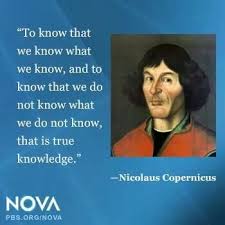
First, you cannot hold onto the ‘Truth’, but you can rest in it, if you let go, (see Yoga Sutras I-23 – I-29). Secondly, you will find that letting go of stuff doesn’t mean it goes away. It just floats there, and if you need it you can pick it up and use it, and if you realize it no longer serves you, than you leave it be. This is challenging for those with years of experience in a images-1subject. The history of science is filled with examples of major breakthroughs and insights that were ridiculed and rejected by ‘establishment scientists that were stuck on their own limited vision. Beginner’s mind was not included in their curriculum.
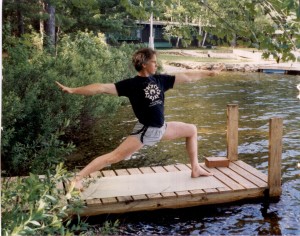
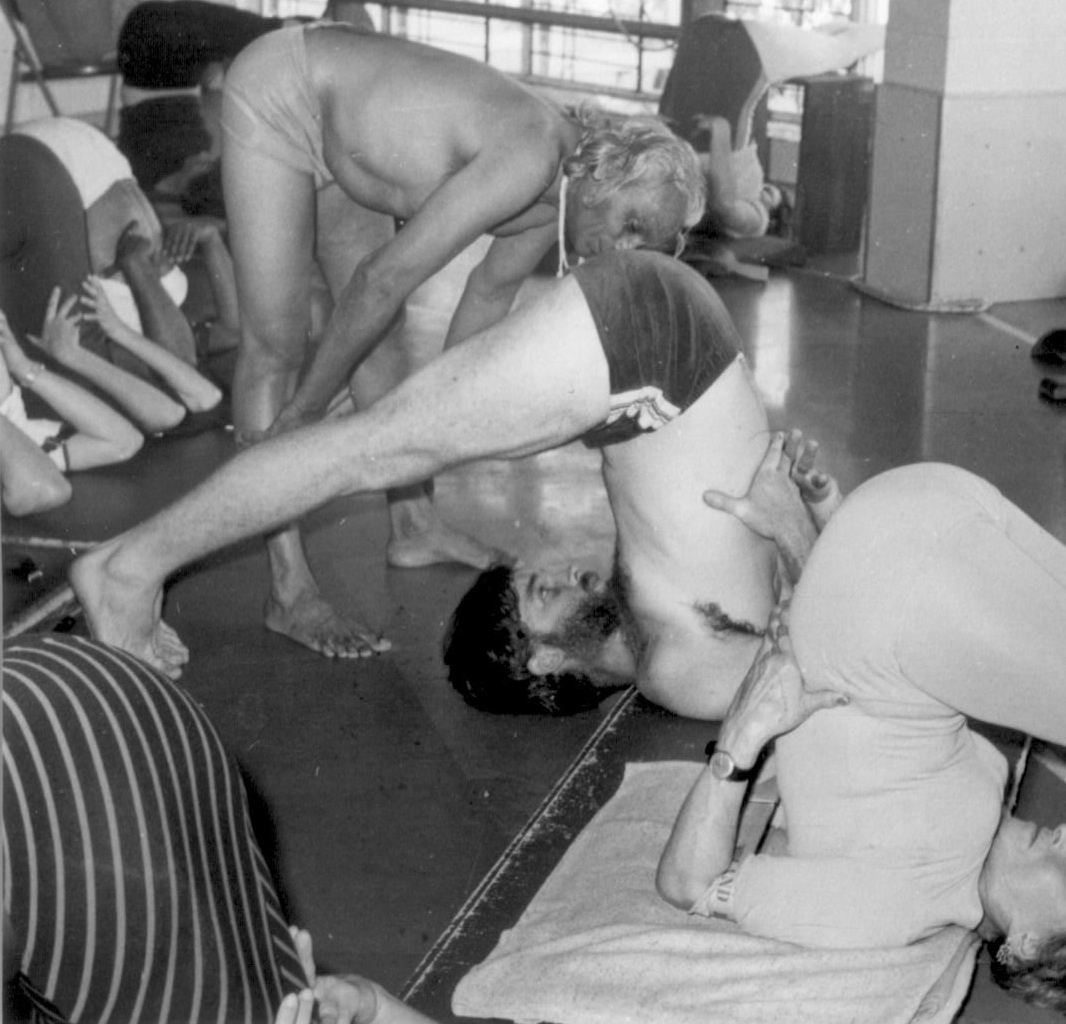
My own yoga practice has continuously been overhauled, sometimes painfully so, by insights previously un-imagined, and discovered outside the ‘yoga world’. That which is of value returns again and again, so it is not a matter of re-inventing the wheel, but of expanding our view, our horizon, the magnitude of our vision. The collective vision is extraordinarily rich, but we have to step outside of our comfort zone to see with new eyes. My own understanding of Iyengar’s practice and depth of knowledge of yoga, which is fundamentally my own soul path, has been greatly enhanced by the creative insights of explorers in other realms of somatics and spiritual practices.

Of course, the egoic structures of the mind do not like change, insecurity, not knowing, being a beginner, so stirring the soul is not always pleasant. This is why new resources of support can be very helpful. As we gain more ground in the shamanic realms and other levels of non local reality, we discover a support system used by shamans and dream travelers for millenia. As a collective, we humans are total beginners here, but our historical moment is primed for a rapid expansion of sensitivity, insight and integration, if we can summon up the patience and courage to plunge into this infinite mystery. The world we are creating begins here, and right now collective unconscious fears are driving the agendas of the political and economic powers. We can change this, now. To re-quote Thomas Hubl,

“The internalization of our spiritual practice and the embodiment of a higher consciousness is not expressed in the experimental bubble of retreat centers, but in challenging life situations, in the marketplace, when deployed in areas of crisis, and in the confrontation with poverty, illness and conflicts.”
 

Notes From St. John, 2016, Part I

Inhabiting a Multidimensional Universe

The recurring theme of the week was the embodied exploration of the seven sacred directions, using asana and movement, to: 1. expand the world we inhabit: 2. discover shadows, ie, the unconscious or unresolved areas of our psychic, as well as physical and physiological space: 3. bring our expanding awareness into the world around us, integrating with Nature, and our relationships: 4: discover the Soul and its primary urges for us in this lifetime. Remember the seven directions begin with the Heart center and include three pairs of complementary directions/energies. Our goal is to integrate these within the pair, and within the whole. Capitalization indicates referral to a sacred direction.

The Seven Sacred Directions

One: The Heart: Discover, feel and open your heart. The heart is the center, the intersection point of all the other directions. Let your personal heart expand into and merge with the Cosmic Heart and rest in the infinite stillness revealed there. Your heart knows how to do this. Your mind probably does not. This is our ‘natural state’, the ‘drashtuh svarupe” of the Yoga Sutras. This practice is 24/7/365.

Two: Earth: Find gravity and what we call down. We are in a body, on Mother Earth. When sitting or standing, feel the vertical line passing through your heart, through your core, down into Mother Earth and feel you heart merging with the heart of the Divine Mother. Feel your whole body responding to weight and grounding. Release and awaken your first or root chakra. Imagine the core line, or chakra line, open so all chakras connect through the root chakra into ground. Feel the stability, what Patanjali calls ‘sthira’. You cannot fall off the planet. You will not float away!

This direction also represents the underworld, the collective energetic experience of the whole 4.5 billion year old history of Mother Earth, the “Sacred Feminine”, with powers, information and support available to us through soul work, dream and shamanic studies. The western world long ago equated the underworld with hell, so it has become a collective region of pathology, fear and terror. We, as individuals, cultures and the planet as a whole, need to spend a lot of time in serious healing here. Step three will be necessary for this.

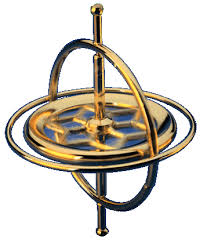
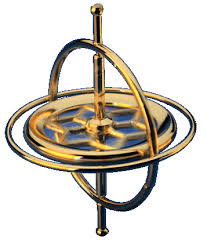
 Three: Heaven: Find levity and lightness as you orient to up, to the sky. From the earth and heart, open your crown chakra and extend the core chakra line Unknown-3upward into the heavens. Feel the levity or lightness in your cells and bones, the expanding upwards of your energy without losing ground. Feel the weight and lightness in balance from the heart as you sit or stand ‘suspended’ or floating between heaven and earth. All chakras turned on and glowing gently, quietly. Feel your chakra line like the center axis of a gyroscope, stabilizing. The heavenly realms are also so home of the angels, devas,  Buddhas and other teachers of ascendent and transcendent wisdom. Lots of support for our soul and social journey resides here. Integration of Heaven and Earth gives us our vertical axis, the core of the fundamental ‘posture’ of the human, and completes the first stage in preparation for asana or any embodied exploration.

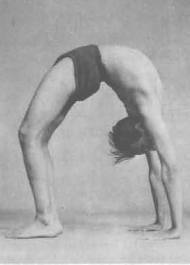
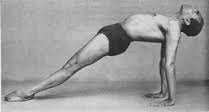
Unknown-2 Four: East or Front: Discover your front body. Face the east, and all subsequent directions will assume this as our base position. Obviously, we will equate the east direction with the front body, as Iyengar demonstrates in ‘purvottanasana’, the intense stretch to the east (side of the body) pose. Notice your eyes naturally face forward from the front and therefore we tend to be much more conscious of the front body, as we can see it best. From an embryological perspective, the front represents the gut body or endoderm, including throat, lungs, intestines, liver and stomach and bladder. It is soft and vulnerable. From the perspective of our psychic body, the east represents sunrise in the daily cycle and the season of springtime. We find new beginnings and the joy and innocence of images-3youth, with lightheartedness combined with a subtle wisdom that is simultaneously both very old and very new. It is not wisdom of culture or education, but of the heart. The front also represents the future and our future selves yet to be revealed. In asana, the front body is opened and explored in depth through the element fire in back-bending poses, either supported or dynamic.

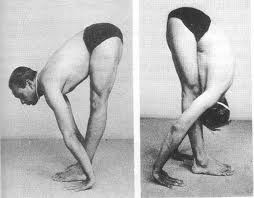
 Five: West or Back: The complementary direction to the front is the Unknown-3back, the west side of the body as shown in ‘paschimottanasana‘, the intense stretch of the west side. West is where the sun sets, so the west represents endings and letting go. The season is fall. In contrast to the East, he Western psychic space is weighty and dark, and is the direction through which we discover the underground and the soul. The back body, as West, represents the past, in its collective wisdom, but also in the karma of our unconscious, unresolved issues, from this lifetime, and previous ones. Thomas Hübl calls this our ‘backpack’ of burdens we carry around in life. As we ’empty’ this backpack though therapy, soul work and inner reflection, we free up energy for our future selves and make the present moment much lighter. In asana, forward bending poses lengthen, soften and relax the back body. In embryology, the back body is the endoderm or nervous system which is soothed, softened and opened in asana practice, by the element water and forward bending postures.

The pose of balance between the front and back bodies is of course tadasana, or sirsanasa. The tissue layer of balance is the mesoderm, or middle layer. In kinesiology, mammalian flexion and extension involve waves traveling back and forth between front and back bodies, so healthy movements are integrating. We will come back to this very important layer a little bit later in this article. This completes stage two.

Six: South or Right: As we face east, the right side of the body points to the south. The right is the solar, yang or masculine side of the yoga energy channels. The south, halfway between east and west, represents noon or mid-day, when imagesthe light is the brightest and youthful energy is at its peak. It’s energy is wild, liberated and exuberant. The season is summer. The psychic space is full of eros, the celebration of aliveness and the fullness of Nature’s bounty.

Seven: North or Left: The left side correspondingly faces the north, the season of winter, the time of day, imagesmidnight. The lunar nadi is the left, the feminine, yin or cooling side. The psychic sphere is the realm of the wise elders, guides, teachers and parents. This balances the youthful enthusiasm of the south. Without the north, the wildness of the south energy can get out of hand and become destructive. Without the youthful south to balance, the old age of the north can become cold, dry and fossilized. All pairs balance each other, and to integrate is to realize how to bring the pairs together as wholeness.

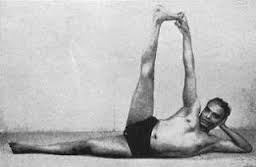
In Embryology, right and left emerge out of the middle layer, the mesoderm where a single energy channel becomes seven, three right, three left, and the center, giving birth to the spinal vertebrae, heart, kidneys and limbs, as well as other connective tissue structures. We explore this median plane and its relationship to right and left in the lateral standing poses such as trikonasana, parsvakonasana and half moon, as well as anantasana and variations. Right and left complete stage three, and we now have our seven sacred directions, the heart as center, and three pairs of complementary energy fields that, when working together, give us a fully embodied, three dimensional field of perception, action and intelligence, from cell to skin ans skin to cell. This is of course, samyama in asana.

Explorations:

Step Eight: As we are in the Caribbean, with the amazing reefs of St. John all around us, we can take this 7 directional field of intelligence into the water, especially snorkeling or scuba diving. When swimming, notice our chakra line is no longer oriented to heaven and earth, but parallel to the earth, along our N-E-S-W compass lines. The front body face down to the earth, back body the heavens. This is a very different orientation, and a very rich one for humans to explore. Also, the buoyancy of the water takes much of the effort out of the muscles, so we can literally float in the water. This too is a hugely fertile field of sensations and movement explorations play with. Rather than just the mechanics of swimming, play with the buoyancy changes the energy fields of the seven directions.

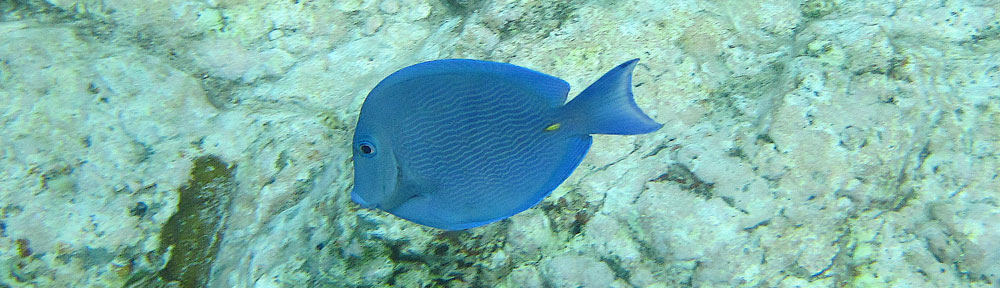
Bluefish_01Step Nine: Now, moving your intelligence field and your mirror neuronal sytem out into the water, begin to embody, or imagine what it feels like to be a: sting ray: turtle: reef fish like a tang: a parrotfish; a sea anemone or sea fan, etc. What do you ‘feel’ when you allow the energy of your chosen being to fill your inner world? What new shapes in your field can you give birth to ?

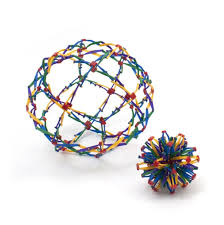
images-1Step Ten: Afternnoon breathing sessions: Our omni-directional intelligence also expands and condenses radially, like the movements of the hoberman spheres, and this offers us another pair of energies to explore and integrate. (tato dvandva anabhigatah, PYS II-48). We can also relate these movements to the Prana vayus, the yogic model of physiological activity.

The prana vayu governs what we take in. It is the expanding, centrifugal energy of getting larger as we fill up. The prana vayu is centered in the chest to help draw breath into the lungs as inhalation, and blood back to the heart. So we want the chest cavity to really feel its expandability, its capacity to open and increase its volume. However, this is not accomplished by using the spinal muscles, or contracting in any way. Inhalation requires getting out of the way and allowing the natural opening to emerge. When possible, use a bolster or rolled up blanket to lift the chest slightly.

The apana vayu governs what we let go of, what we eliminate, and involves a squeezing or condensing centered in the belly and pelvic areas. We take in one direction, through the mouth and nostrils and down into lungs and stomach. But we squeeze out in two directions, down for solid and liquid wastes, but up for exhaling the breath. So the energy of the apana has to be very intelligent and alert to make sure both directions are operating as desired.

The Practice:
Part 1
: either seated or lying down, keep the spine long and relaxed. On the inhalation, without any force or tension, invite the in breath to be primarily driven by the sideways expansion of the ribs, allowing the inter-costal muscles to open. On the exhalation, with minimal tension, allow the exhalation to come from the squeezing of the abdominal wall and not a dropping of the chest. This will help stretch out the diaphragm. Later, we will integrate the ribs with the exhalation, but not before the diaphragm has really opened up. Continue to breathe this way, gradually expanding the chest wall, lifting and opening the dome of the diaphragm, and strengthening the abdominal wall. Notice the squeezing of this is from the back and sides to the center and not a shortening like in a sit-up.

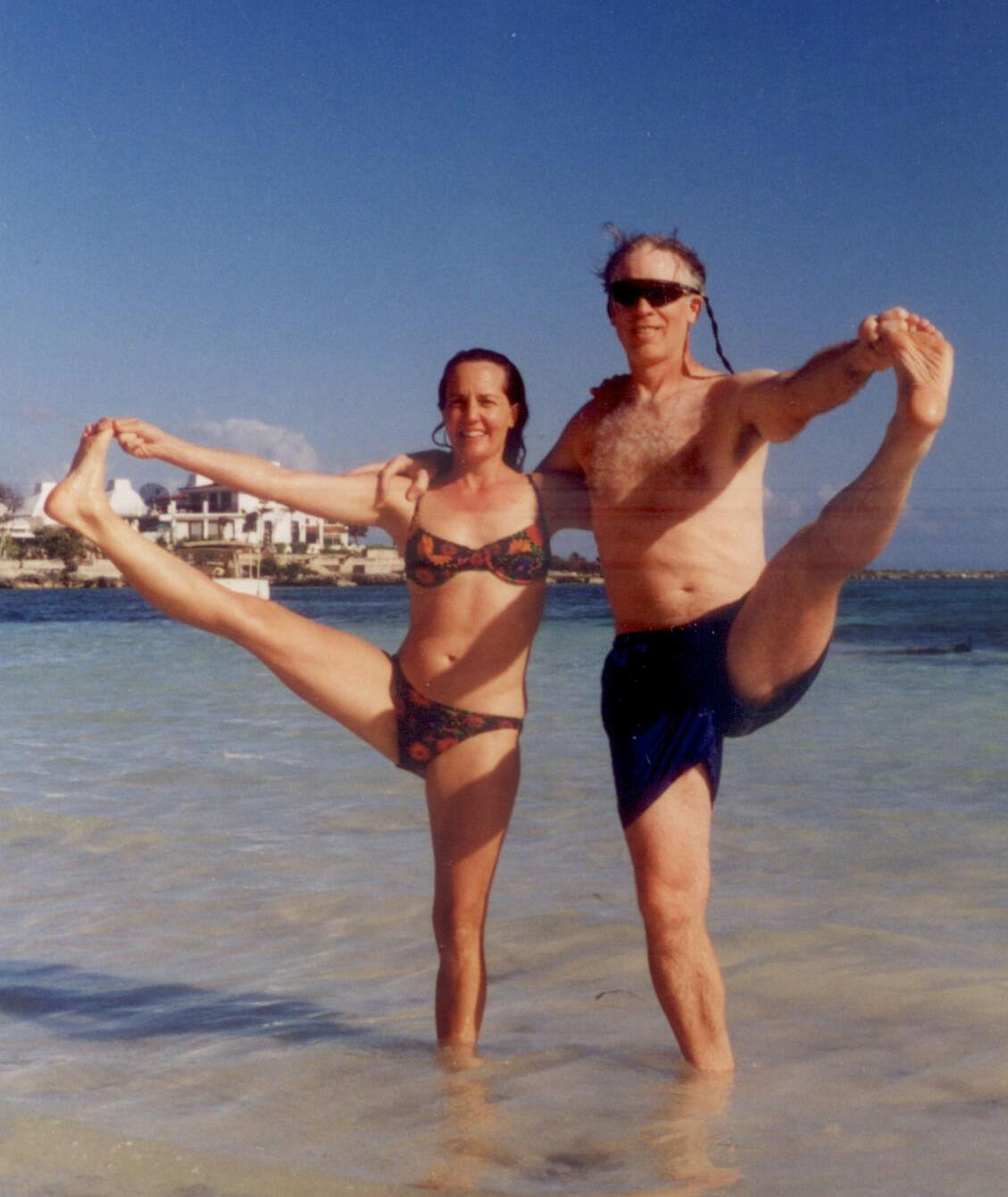
Part 2: Morning Asana: In tadasana find your navel. Imagine your original navel as a portal entering from the front and flowing back towards the spine. As the energy draws your navel to the spine, feel the back of the mesentery, behind the intestines, widening and spreading right and left. Next, imagine or feel this spreading tissue, when it reaches the outer sides of the body, begin to wrap around toward the front. Now let the two ends meet in the middle front body and knit together. Back, Widen, Wrap and Knit. This tones the core, like a mild Kate and Arthur 1996uddiyana bandha. Feel it down inside the pelvis, and up under the ribs around and below the diaphragm. Keep this toned as you breathe in and out. Exhalation will increase the tone. Try not to collapse the tone on the in-breath. Connect this feeling to your legs as well.

Explore what happens to this tone when you go from tadasana into uttanasana and back. Same in any of the standing poses.

More Detroit Notes: 7 Sacred Directions

Balance and Energy Flow through the Seven Sacred Directions

UnknownThe gyroscope offers a model to help get us started in our exploration of our embodied energy fields. We have a vertical axis, a radiant horizontal plane, and a center point where they meet. Feel this dynamic spiraling energy in your body so we can locate, inhabit and awaken the seven sacred directions of the cosmos. We will find a center and three pairs or polarities of energies that interact with each other to guide us home to the wholeness of the Sacred Universe, our true nature, or drashtuh svarupe.

In our bodies, our heart is the Center, the place ofimages-1 balance, of home. This is the first direction, the primary direction and organizing center, and is represented by the energies of expanding and condensing as shown in the Hoberman spheres. Energies fills the heart from the other six directions, and the heart radiates energy out to the world through the other directions. The other six directions all find expression of their qualities through the heart as variations of Love

The vertical axis gives us the first of the three pairs of sacred directions and is our connection to the ‘unseen’ or hidden realms of existence, (unseen to our ordinary senses and modes of attention!)

The second direction is Down, through our root chakra, the muladhara, into Mother Earth, into the deep feminine, the dark underworld of the unconscious, of life at its primal level, unconditioned by social rules and repressions; into the shamanic world of fairies, elves, djinns and nymphs; of plant and animal guides and an ageless wisdom waiting to be rediscovered. We might call this the realm of the “Soul”. Patriarchal cultures are terrified of this realm and have demonized it for millennia. Still happening today, sad to day. If you believe yoga is about gaining controol of the body/mind, than your soul is needing serious nourishment!  Fortunately there is a vast movement diving into ‘Soul”, ‘waking down’, rapidly making its way though many dimensions of modern culture into the world. To dive into the soul in a healthy way, we need the support of all seven directions.

The polar opposite direction, Up, connects us through our crown chakra to the heavenly realms of angels, Buddhas, and no longer embodied enlightened beings and teachers, to the intelligences of other stars and galaxies yet to be noticed on our planet. Traditional, ie patriarchal, forms of spirituality have place ascending, (getting to heaven, kaivalya) as primary or only way of spiritual growth. We are now moving toward an integral approach to spiritual practice that honors, and requires, all directions.

The horizontal plane has the final four directions, two more pairs, also known as the cardinal directions of North, South, East and West. These represent the ‘seen world’, (as opposed the the unseen of the vertical axis) taken in by our five senses. These directions can be seen as references for pairs of skills and talents, life situations and challenges available for us to be cultivated and healed during our time here on the planet. This is a cross cultural model with different attributes and imagery associated with each of the four. They may represent: the four seasons of summer, fall winter and spring; the four cardinal moments of the day: sunrise, noon, sunset and midnight; the four basic elements of earth, water, fire and air. Native Americans use the four directions of the ‘Medicine Wheel’ as map for the sacred journey of life.  For our purposes here we will draw upon observations from Bill Plotkin’s Wild Mind” mentioned in a previous blog, as well as a more traditional yoga perspective and poses, as we embody these possibilities.

East: Sunrise, the front of the body, purva, as in purvottanasana, beginnings and rebirth, springtime. From “Wild Mind” we find the combination of innocence and wisdom leading to simplicity and joyousness, curiosity and a sense of adventure in life. When East is lacking or repressed, we can get dark and heavy, weighted down by West’s connection to death and dying and the challenges of ‘soul’ work.

West: Sunset, autumn, the back of the body, paschimottanasana, endings, letting go, completions, introspection. ‘Wild Mind’: A connection to death and transformation, the underworld, the ‘soul’, to romance that is utterly and darkly mysterious, to our muse that flows from our deep imagination. When West is repressed or lacking, we can become very superficial or trivial as East’s lightness loses the grounding provided by West. This is common in spiritual communities with a charismatic leader with a dark shadow. If we are looking for the ‘light’ but refuse also to see and acknowledge the dark shadowy side that we all, including spiritual teachers, have, we repress our own unconscious pain and confusion. We pretend to be ‘light’ because we believe that is what spirituality is supposed to be about, but our souls suffer deeply when ignored.

North: Midnight, winter, the elders, keepers of the ancient wisdom, the left side of the body. “Wild Mind”: the nurturing adult, the healer, leader; the source of compassion and connection, of belonging. When North is repressed or ignored, we can become selfish and hedonistic as ‘wild youth’ of South loses its way in the world without the guidance of the adults and elders. Modern culture lives with North repressed as most of the ‘leaders’ in politics and business these are terminal self centered adolescents.

South: Noon, summer, the right side of the body, youth. “Wild Mind”:  wild and indigenous, totally home as an embodied being, erotic, instinctually alive and connected to all of the natural world, flowering, traveling, celebrating aliveness. When South is neglected or repressed, we can become overly serious and frozen in our beliefs and attitudes as the adult side loses its wild and youthful balance. The future becomes terrifying and we long for the ‘good old days’ when things were ‘done the right way’.

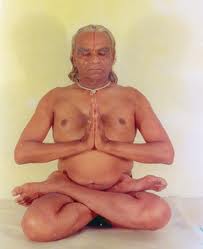
BKS padmasanaThe Embodied Practice:

Start with any centering pose, sitting or standing. From your heart, open root and crown chakras to open center channel, balance front body with back body, right side with left. Feel centered and alive. Rest in the stillness at the root of the heart. In all poses keep returning here again and again.

Balancing North and South, aka Right and Left. AK-Vira-II-19881-300x236Many standing poses are designed to balance right and left. By doing each side with awareness of center channel and front/back balance, the imbalances can be seen explored, and balanced, as best possible. Go beyond the structure and feel Right/South and Left/North qualities  awakening and growing. Find poses where you can stay long enough to take all this in. In all poses, balance right and left. (Notice that hatha yoga is a very ‘South nurturing’ practice.)images-3-1

images-4-1Balancing East and West, aka Front and Back. Forward bending and back bending poses are obvious. Go beyond the structure to add the qualities of East and West in your explorations. Mild back bends like salabhasana or sphynx  and simple standing forward bends are great ways to play with layers beyond the physical. Keep your back muscles relaxed to feel the West/mystery behind you. It is a scary place so we all tend to hold on, unconsciously. Of course, in all poses, balance front and back.

Balancing Heaven and Earth, head and tail. halasana 1982Inversions, supported when necessary offer an obvious way to balance above and below. But any and all poses allow the sense of up and down, into the earth and up the the sky, weight and lightness.

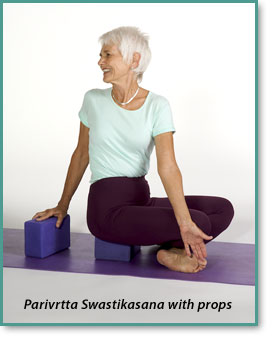
Integration: The Spiral: Feel how twisting poses allow you to play with all directions simultaneously. Be the gyroscope, and feel how you can spiral up, down or both. How you can turn right, left or both, in any twist. Spin out to the horizon line and back into to your center. Expand your horizons beyond the body, and what you think are your limitations. These poses are really fun.BettySitTwist

Returning to the Source: Unknown-1Savasana: Back into the center, into the stillness, into the mystery.

Moving Out into the World

When ready, bring all of your qualities, all seven directions, your Whole Self, into the world and live the good life in all of its delightful and challenging aspects.