 In the next three posts I will present a trinity of trinities for your contemplation and life practice. Patanjali’s Yoga Sutras are treasure trove of wisdom for aspiring and awakening students in yoga and here is a way to help organize his genius into immediately applicable practices. This post is the first and begins with the three sutras that compose the core of Patanjali’s brilliance.
Trinity #1
The first trinity, and the most important, appears in the Samadhi Pada: After the 1st sutra officially and formally introduces the program, the next three delineate the whole yoga process. When these are deeply internalized, you are on your way to living an awakened life. All spiritual practices ultimately return here and the rest of the Patanjali’s sutras always refer back to these three.
I-2 yogash citta vrtti nirodhah:
Yoga is the resolution of the (dysfunctional) mind states.
I-3 tada drashtuh svarupe avasthanam:
Then the identity of the Self (I am) with pure Awareness becomes stable.
I-4 vrtti sarupyam itaratra:
(At other times, i.e., in dysfunctional mind states) mind activity is mistaken for the Self.
These three as a whole have a universality as we can see by imagining some alternative presentations of the teaching. A Buddhist might say:
Yoga is the cessation of suffering. Then the realization of Buddha-Nature remains as a stable presence. When there is suffering, it is because of ignorance and attachment to transient phenomena, including the notion of a self.
Modern spiritual teacher Eckhart Tolle might translate it this way:
Yoga is the transformation of the energy of the ‘pain body’ into Presence. Then Presence remains unbroken and undisturbed as your life story unfolds. In the absence of Presence, there is an identity with the ‘pain body’ and suffering arises.
A Vedic perspective would be:
Yoga is a dispelling of ignorance about the True Nature of the Self. Then inadequacy vanishes and the knowing that ‘I am Wholeness’, Atman is Brahman, remains stable. Ignorance is caused by identifying with smallness and limitation.
Summary of these sutras
First, there are practices and disciplines. Many yogic practices mentioned in the Yoga Sutras, but they all involve variations of citta vrtti nirodhah, processes that transform the energies being consumed by dysfunctional mind activity into mental health and spiritual insight.
Secondly, there is a goal: the goal is spiritual awakening. Patanjali’s uses ‘yoga’ in sutra I-2 to mean: Integral Spiritual Awakening, Enlightenment, the ‘End of Suffering’, Liberation, Self-Realization, Moksha, Drashtuh Svarupe Avasthanam, etc. This is a universal goal in all spiritual practices. As we will see, this goal is not an ending, but the beginning of living an awakened life. Yoga also is an umbrella term for the practices of transformation leading to and sustaining awakening.
Thirdly, there are obstacles that are preventing this realization that must be recognized and studied. These are all based on the mistaken notion that the ‘I am” or self sense we all have is somehow separate from the whole, leading to feelings of inadequacy and the suffering that ensues. We create ego structures and strategies to help us survive and function in the world, but the underlying confusion about “who I really am” keeps creating suffering for ourselves and others. Spiritual awakening is the realization that “I am Wholeness”, ‘aham purna‘, and, simultaneously, I am an individual expression of this wholeness living in the world, with desires and needs, skills and challenges, looking to grow, evolve and participate in the awakening of our home planet, Mother Earth, and the Cosmos. The Bhagavad Gita expresses this perfectly. We are both Krishna and Arjuna, both unbounded Divinity and a human being trying to make sense of our place in the world.
Quick Overview of Patanjali’s Yoga Sutras
Patanjali offers us 196 sutras, spiritually pithy statements on spiritual awakening, with layers of meaning needing to be unfolded. These are divided into 4 chapters or ‘padas‘, the four feet. The first chapter, known as the Samadhi Pada, is addressed to mature students who have attained a certain level of maturity and mental and emotional tranquility, and the practices offered here are more advanced. In chapter 2, the Sadhana Pada, Patanjali goes back to the beginning for newer students to give background and preliminary practices he calls kriya yoga and ashtanga yoga, and some lessons on the Sankya model of reality. We will look at Kriya Yoga and Ashtanga Yoga in detail in the next two posts. The Vibhuti Pada, chapter 3, adds some esoteric explorations and practices, while the Kaivalya Pada, chapter 4, goes into deeper Sankhya metaphysics.
Only 1 sutra, I-3, describes the nature of an integral spiritual awakening. The other 195 describe the obstacles and practices as well as the principles of the Sankhya Philosophical School that articulate the model of reality of Patanjali’s teaching. Sankhya is a dualistic model of reality which helps new students to spiritual practice clearly differentiate two perspectives from which we can experience reality. This is a crucial skill that begins spiritual practice..
The first perspective, known in Sankhya as Prakriti , is the relative world, or what we ‘see’. Also known as creation, the world of form, manifestation etc, it is dynamic, constantly changing, mutating and transforming. This is the world studied by science with atoms and galaxies and thoughts and neurons and ideas and beliefs. Forms appear, stay around for a awhile and then disappear. They are all unconscious, limited and ultimately unstable. The Buddhists call this the world of impermanence, in Vedanta, ‘what arises in awareness’. In our inner world, these are the citta vrttis. But this is also where our unique embodied presence engages with the world.
The complementary perspective, Purusha or Drashtuh in Sankhya, is the Seer, the Absolute, Pure Consciousness. This is unchanging, unbounded, unlimited Awareness mentioned in I-3, tada drashtuh svarupe avasthanam. The Sanskrit term Viveka describes the ability to discriminate Awareness from what is arising in awareness, Purusha from Prakriti. Cultivating this practice is essential for spiritual growth.
Sankha’s dualism is useful for beginners because most probably have never even noticed these two perspectives, especially the unchanging Absolute or Seer, because we always notice the Seen, the world we perceive. Because this is an inherently unstable place, our poor egos, temporary forms themselves, seek stability and permanence by creating a self sense through mental structures in the form of ideas, ideologies and beliefs that are also unstable. This unending chase is known as suffering, confusion, or spiritual ignorance. These mental patterns are the citta vrttis that need nirodhah.
When we look inward, developing the first stages of witnessing consciousness as we will discuss further along, we begin to see the instability and impermanence of thought, but also begin to notice that there is an unchanging awareness that sees. And this Seer remains even as the forms disappear. Awareness and what arises in awareness are different. Awareness is unchanging as what arises comes and goes. Eventually the ‘I am” recognizes that this unchanging Awareness is “I am” and the depth of peace and knowing that dawns in this awakening is beyond comprehension.
Sankhya, a very masculine school, states that the goal is for Purusha to not only differentiate, but separate from Prakriti in what is called Kaivalya, aloneness. This leads to poor Shiva, sitting alone on his mountain top, in absolute silence and stillness, terrified of the feminine. In Non-Dual school like Vedanta, masculine and feminine meet as wholeness in an integral spiritual awakening. We are infinite stillness and wholeness, and, paradoxically and simultaneously, unique beings learning and growing. This is spiritual maturity. But Sankhya is great at differentiating the pieces of the puzzle, so we use it wisely.
The Bhagavad Gita, based on Non Dual Vedanta, devotes most of its verses to the nature of being awakened and is a perfect complement to Patanjali. These two spiritual gifts from India go hand in hand and should be studied together as we humans are paradoxically and simultaneously whole and confused.
These Three Sutras in Depth
I – 2: Practice
I-2 yogash citta vrtti nirodhah:
Yoga is the resolution of the (dysfunctional) mind states.
In I-2, Patanjali begins his description of ‘yoga’ with three words, citta, vrtti and nirodhah. Many students and teachers stop at this one sutra, believing these three words give the complete definition of yoga, but it does not. Only when I-2, I-3 and I-4 are studied together does clarity come.
Citta is the term for the mind field, in its largest, most general sense, as opposed to manas, ahamkara and buddhi, words which refer to specific functions of mind. The mind is a busy place with multiple skills and and many layers of activity and sensitivity in its functioning and yoga is an inquiry into its functioning. ( see the Neuroscience section for more info.) We might also call citta a quantum field, where the individual mind field is an emergent expression of the universal mind, the quantum field of the whole. It is a place of infinite possibility waiting to be activated by the creative urge, but also expressing itself from the impulses of karma and habit. This is the field where we work our yoga alchemy, nurturing what is inherently healthy and weeding out the unhealthy.
Vrtti comes from the Sanskrit root vrt meaning to move, to turn over. The same root appears in the English words revolve and revolution. So we can see citta vrtti as the turning over of the mind, or in more modern terminology, mind activity or organized bundles of mind activity known as mind states emerging from the quantum field. Vritti refers to the energetic nature of mind. It is always moving. For those interested in the neuroscience of mind states and mind activity, read Dan Siegels’ “The Developing Mind”. It is one of the more extraordinary books of our time.
A common mis-translation of vrtti is ‘thought’. Vrtti refers to all mental activity, mental processes, and mental states, not just thinking and thoughts. Thoughts are vrttis, but so are perceptions, emotions, memory and imagination. Patanjali explains this further in sutras I-5, – I-11.
Nirodhah implies restraining, eliminating, dissolving, resolving, but not stopping or resisting. Citta vritti nirodhah describes a specific type of transformation that resolves some aspects of mind activity, but not necessarily all mind activity. The word ‘all’ is consciously left out this sutra because many of the following sutras involve using specific metal states and activities, also known as yoga, to help dissolve the unwanted ones. This is explained by Vyassa is his commentary found accompanying many translations of the Sutras, and in the modern principle of neuroplasticity. James Austin, in “Zen Brain Reflections” offers “No-mind does not mean a coma. It means that no self-centered thoughts interrupt the flow.” Yoga is not about having a blank or empty mind, but as we will see, being able to recognize and stabilize our connection to the absolute stillness that is the source of all creation while still being in the world. Creation need not be negated to find stillness, just differentiated.
The word resolved (nirodhah) is the ‘clue word’ here and carefully chosen to indicate the alchemical transmutation of the mental energies through yogic practices. No longer crystallized out as stuckness or aimlessly going in circles, the psychic energy of unhealthy patterns is channeled back into the on-going flow of the moment in an more integrated mind. The old forms dissolve, like a wave dissolving back into the ocean.
Suppression or repression, as we have come to understand in modern psychotherapy, is a strategy that ultimately strengthens the unhealthy energy patterns. The terms ‘spiritual by-pass” or pre-mature transcendence’ describe the modern attempts to avoid dealing with our own painful memories which are the roots of suffering. As the modern world reminds us over and over, it is possible to be a charismatic, spiritually powerful person and still be emotionally dysfunctional.
We should not be afraid of our emotioinal pain. Jack Kornfeld quotes Ajahn Chah; “If you haven’t cried deeply an number of times, your meditation hasn’t really begun” (Path With Heart, pg 42). As we will see, those painful energies can be transformed and used for awakening the yogic mind, and we may need help from psychotherapy to get started safely. And we can always do simple meditation.
For the average person, there is a seemingly non-stop dialogue on going in the mind, commenting, comparing, criticizing and often just babbling, often accompanied by emotional upheavals. Beginners in yoga and meditation struggle with attempts to stop this process, but the mind seems to have a mind of its own. It is easy to become totally lost inside the mind. Who am I? How can I find myself? We seek something stable to grasp onto amidst the teeming flow of ideas sensations emotions. We often settle for a false stability by holding onto a conglomeration of likes, dislikes and desires and call this ‘Me’. But we eventually see that these are unstable. There may actually be several ‘me’s inside the mind, often in conflict. We meet the citta vrittis that need some nirodhah.
The first step in meditation is recognizing the ability to just notice the mind activity, like you would observe a conversation between two people. You may notice many different voices contributing to your inner dialogue, but as a witness to it, as awareness itself, you no longer need to resist it. This witnessing mind doesn’t criticize or praise, like or dislike. It just sees what is, objectively. In sutras, I-5 through I-11 Patanjali describes various types of mind activity. This witnessing awareness is silent, open. As the witness becomes stronger and more stable, the ‘monkey mind’ loses much of its fuel and may occasionally just stop, leaving bare awareness or stillness. The witness can also be the last refuge of the ego, so we have to stay alert.
This is the first stage of nirodha. As we look more deeply into the neuroscience of mind activity, we see this as an alchemical transformation of the patterns of energy. Witnessing helps us to stop feeding our neuroses. To see an unhealthy thought from a witnessing perspective, and to consciously choose to not further feed this idea with energy is a form of inhibition very different form repression. Also, in neurobiology we discover that mind, for survival purposes, is inherently biased toward fear and anxiety, so it requires a serious effort to overcome this.
“Science is now revealing how the flow of thoughts actually sculpt the brain.” (Buddha’s Brain”, back cover). Modern neurobiology refers to this process directing energy flow into patterns of health and wholeness as integration and the capacity for change and growth as neuroplasticity. We could thus call yoga the science of integration. “Neural integration is fundamental to self-organization, and indeed to the capacity of the brain to create a sense of self. As we will see in sutra I-33, loving kindness, compassion, friendliness and equanimity are specific types of mind activity that promote deep healing and further unfolding of the infinite possibilities of human potential.
Next Patanjali describes what happens when the energies of suffering have been transmuted.
I – 3: Realization
I – 3, Tada drashtuh svarupe avasthanam:
Then the identity of the Self (I am) with pure Awareness becomes stable.
Tada, then, in the fruition of this practice, with the accomplishment of the practices of yoga, when the negative or self-destructive energies have been transformed, drashtuh, the Seer, Awareness, “I am”, Purusha; svarupe: the truth of, the true nature of; avasthanam: stable abiding.
With the fruition of the yoga practices, the yogi realizes ‘I am Light and Love’ and remains grounded in her own infinite wisdom and compassion, while continuing to be a vibrant presence in the world. The key word here is stable, from the Sanskrit root stha. In verse 2-54 of the Bhagavad Gita, Arjuna asks Krishna to describe a person with ‘stable wisdom” sthitaprajna and throughout the rest of the second chapter, the key one in the Gita, Krishna goes on to explain that Awakening or Self-knowledge goes hand in hand with mastery of the mind, and this is the yoga of the Gita. The Hsin Hsin Ming, or “Verses on the Faith Mind” attributed to the 6th century Chinese Zen master Seng Ts’an, also offers an eloquent and beautiful unfolding of this key sutra.
This deep spacious unbounded openness remains present as life unfolds through space and time. Luminous emptiness is a lovely term used by the Tibetan Buddhist teacher, the 12th Gyalwang Drukpa. There are many more Sanskrit and English words that are used interchangably to point to this ‘beyond words’ we awaken to. Purusha is the term Patanjali will use the most and he will contrast this with Prakriti, creation, the world of form. There is no fear, no resistance; only open spacious silence from which one can listen deeply to the emerging moment.
Ironically, all of us have tasted the infinite self without necessarily recognizing so. We have all had moments of total inner peace, of the dropping away of conflict and struggle and resting in the ever-present joy, light and love. Because there is no meta-recognition here, that is, we don’t ‘know that we know’ it is not technically yoga. And these states are certainly not stable. But we can use these experiences as guideposts to help us relax and see yoga practice not as a struggle to acquire something ‘other’, but the opportunity to rest in this moment as it ‘infinitely and amazingly’ is.
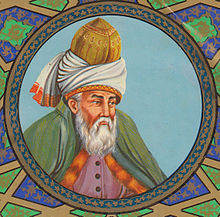
Also, there can be spontaneous revelatory awakening, known as kensho or satori in Japanese Zen, where delusion drops away and the Self as unbounded luminous awareness shines forth, and bingo, there is recognition or jnanam, knowing. This is often preceded by some type of spiritual practice, but not always. But usually this awakening is unstable and eventually the previous confusions return. This is why we continue to practice. Even what appears to be stable awakening can have surprise visitors from the unconscious. Steady practice keeps us ready for all comers. 13th century Sufi poet and mystic Rumi offers deep spiritual insight to this.
The Guest House
This being human is a guest house.
Every morning a new arrival.
A joy, a depression, a meanness,
some momentary awareness comes
as an unexpected visitor.
Welcome and entertain them all!
Even if they are a crowd of sorrows,
who violently sweep your house
empty of its furniture,
still, treat each guest honorably.
He may be clearing you out
for some new delight.
The dark thought, the shame, the malice.
meet them at the door laughing and invite them in.
Be grateful for whatever comes.
because each has been sent
as a guide from beyond.
— Jellaludin Rumi,
translation by Coleman Barks
I – 4: Obstacles
I-4 vrtti sarupyam itaratra:
(At other times, i.e., in dysfunctional mind states) mind activity is mistaken for the Self.
(At other times, that is, when not in the state of yoga), the negative mental patterns and the dysfunctional mind states, based on a self sense of limitation and separation, self predominate. A dysfunctional mind state inhibits rather than promotes or sustains healthy growth, learning, integration, and well being, because its root premise is false. The self is identifying with fear, anxiety and all the other thoughts and emotions that are pushing and pulling the mind in different directions. The drashtuh svarupe with its innate tranquility of the mind is not seen or recognized. This is the opposite state to yoga, known as suffering or dukha. The dysfunction can be mild moderate or intense, active, latent or dissolved. When active and intense, violence can often arise, to oneself or others. When mild or moderate there is still suffering and unhappiness. In the collective awakening, social groups and communities can express this dysfunctionality and pull others along into the suffering.
As mentioned previously, spiritual beginners can practice this sutra through what in meditation is called ‘witnessing mind’ where we recognize a ‘meta’ level of cognition. Not only are there thoughts, but I can be a witness to them. I can be a witness to all my sensations, feelings and emotions as well. Thus, if I can witness them, then they cannot be ‘me’. Therefore I do not have to ‘identify’ with them by adding an I, my, me or mine. Also, I can develop self restraint so I do not react unconsciously when I am triggered. The witness allows a pause, some choices about what actions I may take and helps change the direction of energy flow to health and insight.
If I can witness them from my heart and keep it open, especially the challenging and unpleasant ones, as Rumi describes above, then stability will come. This is a non dual heart centered practice where ultimately there is no ‘other’, only wholeness, at every level and layer of reality.
The process of identifying with the mind activity is often deeply engrained as mental habit. We build a personality out of what “I like” and what “I don’t like” and most of the time we are entangled in this battle between my likes and dislikes. Over time we realize the witness is not another needy’ me’ but an infinitely vast awareness with no boundaries or limitations. This is Purusha, or drashtuh svarupe. As anyone who practices knows, there are layers and levels of confused indentification lurking in the individual and collective unconscious, so the work never ends. Staying awake is much more challenging than waking up in the first place, especially in the modern world where we are processing the karma of the human species.
When I first discover that I can be deeply grounded in both the luminous emptiness, and the turbulent and chaotic world of form, I get my first taste of spiritual freedom. I can be in the crazy modern world, moving through it, making choices, decisions and acting, like Arjuna in the Gita, and still remain rooted in timeless presence. It is not one or the other but the integration of both. This is a major challenge and the razor’s edge of a dynamic spiritual life.
Modern spiritual teacher Adyashanti has produced an extraordinary cd, “The Phases of Awakening” where he unfolds several of the key stages and transitions that are often experienced on the journey of spiritual awakening that is described by Patanjali in these three sutras. As we are all unique individuals, there are an infinite number of ways in which the process evolves, but, none the less, there is also much commonality across time and culture. I highly recommend this for all on the amazing journey of awakening.
P.S.
I am going out on a limb here and giving Patanjali credit for a non-dual, integral spiritual vision of wholeness because the practices he articulates can take you there. The Sutras are based on the dualistic Sankhya school which states that the completion of the yogic journey is Kaivalya or the isolation of Purusha, pure awareness from Prakriti, creation, and remaining there. This is the point of view of the masculine spiritual lineage dominant at the time. Purusha, or Shiva, is whole when resting alone, atop his mountain, in absolute stillness. His wife Parvati, as prakriti, the feminine, knows better. Wholeness requires both the masculine and feminine. Awakened living is actively participating in creation moment to moment, at as many layers as you can access. Is recognizing and resting in absolute stillness required? Absolutely. It is a skill to be developed and integrated. But it is not the end of spiritual development. This comes when you come out of your cave and down from the mountain, bringing this awareness to live in the world. These three sutras express this very clearly.




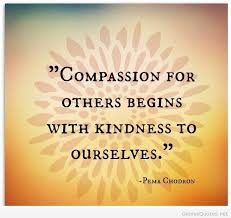
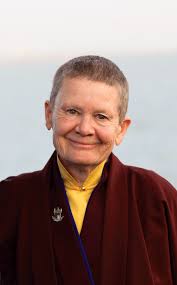 “When I was about six years old I received the essential bodhichitta teaching from an old woman sitting in the sun. I was walking by her house one day feeling lonely, unloved and mad, kicking anything I could find. Laughing, she said to me, “Little girl, don’t you go letting life harden your heart.”
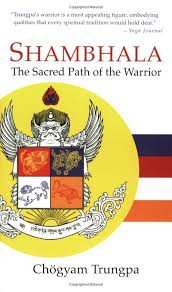 In the Shambala teachings of Chogyam Trungpa, Pema’s root teacher, the fundamental energy of the heart, or basic goodness as he describes it, is known as lungta in Tibetan. Lung means wind and ta means horse. Trungpa talks about raising windhorse as a key practice as it is the life energy of bodihcitta.
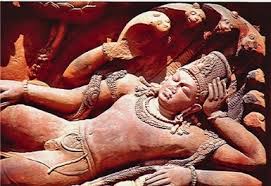 universe flowing. The cosmos is a macro-phase expression of our own true nature, the drashtuh svarupe Patanjali mentions in I-3. Bodhicitta contains within it the desire for all beings to awaken to their wholeness, their inherent Divinity, their basic goodness. By becoming one with Ananta, we are offering ourselves to this force of awakening that sits at the core of the universe. We then embody the bodhisattva tradition of participating in life for life as a whole, and not just our smaller minded egoic selves.