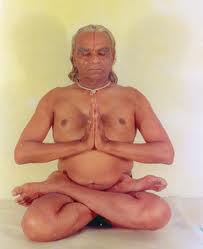


This is a follow-up to B.K.S. Iyengar’s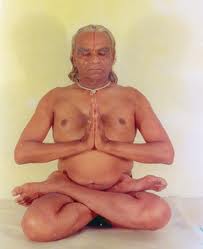 Samyama part 1, (and happy 95th birthday Mr. Iyengar, born December 14, 1918).
You all know ‘samyama‘ (the simultaneous and sequential practice of dharana, dhyana and samadhi as described in chapter 3, the Vibhuti Pada of the Yoga Sutras) on one level or another, if you are practicing, as it is embedded in the nature of the organism to integrate intelligence, sensation and action. Driving a car is a simple and common example. The organs of action, ( hands on the steering wheel and gear shift, feet on the pedals), the organs of perception, (eyes and ears), and the intelligence, all act together as a single conscious process. As I am in the middle of teaching my 16 year old son how to drive, I fully appreciate that refining the art of driving is an ongoing event.
Same in mastery of the art of asana. Asana or posture is an on-going process of action, perception and intelligent inquiry. This is a point often missed in the modern approach to teaching asana where there are non-stop ‘acting’ instructions and no pausing to ‘reflect’ or receive the effects of the action. Iyengar spent years practicing vinyasa style yoga with his teacher (and brother-in-law) Krishnamacharya, refining his ability to move effortlessly, before he matured into his style of experiencing every pose as a meditative pose. There is tremendous elegance and artistry to be felt and expressed in movement, but samyama is different because of the stillness required. Maturity, patience, persistence and total openness are needed on this inner journey of awakening.
You already know this. In your practice just relax, be the ‘Seer’, and ‘See’ what is happening. Step one is to tap into the energy flow and sustain your attention here. (Not always easy as we all begin with some level of Attention Deficit Disorder.) For beginners, it is the outer breath. More experienced students realize that all energy is breath, aka prana or chi. Second step is to find the yin/yang, the dvandvas, a positive – negative polarity around which you can follow the ebb and flow of energy. Allow this polarity to find balance. This may take some time as well. Be patient. Third, drop the psychological content. ‘Drop it’ does not mean ‘stop it.’ Just let it be, without holding on to it, and continue to return to and sustain your attention to the physiological energy flow. This stage feels a bit like snorkeling or scuba diving as you are moving into the inner world of water, waves and other fluid movements.
Now, find the center or still point, the fulcrum around which the pair of energies oscillate in equilibrium. Rest in that center and continue to “drop everything”. All that remains is infinity, the luminous emptiness, Pure Awareness, that is the Source of all movement/activity. Rest in the silence. You may get a micro-second glance or longer before your attention is pulled back to the physiological or psychological activity. Not to worry. It is all process. Start again with bringing your attention to the energy flow. This is dharana. Staying there with your attention is dhyana. Relaxing into this state is samadhi, and the continuous cycling through the steps is samyama. Forever. The seeds of awakening will germinate and grow as you practice with awareness and sensitivity.
Remember that the ‘Silence’ referred to here does not require the absence of mind activity but a shift in attention from what is moving to the ever-present silence. Just as the experience of “Now” does not require ‘stopping’ time, tasting the silence does not require forcing the mind into stillness, which is essentially impossible. Just notice that ‘Silence’ is ever-present, whatever may arise. Awareness or Presence are other words people use to point to this. It is only habit that keeps us from resting in our own stillness, (drashtuh svarupe avasthanam).
Although your own direct experience is the most crucial aspect in making sense of Mr. Iyengar’s discourse on “Samyama in Asana”, some background information on the Samkhya model of reality can be very helpful as the term samyama comes directly from Patanjali. The meditative journey to awakening as articulated in his  Yoga Sutras uses the principles of Samkhya as the primary road map. Not quite as simple Taoism, it has 25 elements rather than two. These 25 are not abstract concepts but living qualities to be experienced, tasted, felt and studied. Consider this as a map to help you navigate your direct experience of the energetic reality. If you break the 25 into 5 groups of five, the whole model becomes much easier to digest.
The first five begins with the primary two, Purusha and Prakriti. They are foundational, sort of like the yin and yang principles of Taoism, and are at the root all of the sutras. Purusha can be seen as the masculine or yang 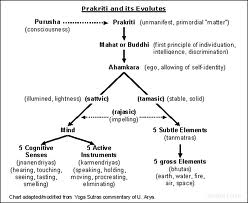 expression of spirituality, the formless, unchanging, unbounded, and unlimited ‘Seer’, often described as ‘Soul’ in western spiritual writings. Prakriti would then be the yin, the feminine, the world of unlimited forms, the ‘Seen’; of birth and death and all modes of change. Spirit is often used in the west to describe this manifest dimension of spirituality.
Enlightenment, in the Yoga Sutras, involves differentiation or discrimination between Purusha and Prakriti, the Seer and the Seen, and the realization that the Self, the “I” is the unchanging luminous “Seer”, Purusha, and not the mental constructs created by the mind, which are in the realm of prakriti. (Samkhya sees prakriti as separate from Purusha, enlightenment requires isolation from Prakriti, and thus is a dualistic philosophy. Modern spiritual understanding sees the limitation (and masculine bias!) of this perspective and recognizes that the world of forms, the feminine shakti/prakriti is never separate from the formless. Integral spirituality, (and Vedanta) honors both aspects of creation equally.)
Patanjali introduces enlightenment immediately in his Yoga Sutras. In the Samadhi Pada, chapter 1, 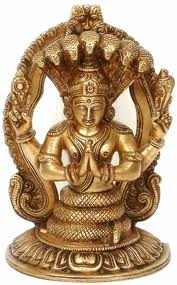 he says:
I-2 yogash citta vrtti nirodhah:
Yoga is the resolution of the (dysfunctional) mind states.
I-3 tada drashtuh svarupe avasthanam:
Then the identity of the Self (I am) with pure Awareness becomes stable.
I-4 vrtti sarupyam itaratra:
(At other times, i.e., in dysfunctional mind states) mind activity is mistaken for the Self.
The notion of ‘identification’, who or what am I, is introduced and enlightenment here is described as clearly recognizing that the true nature of I, of ‘I am’ is the infinite, unbounded Purusha, and this recognition becomes stabilized over time. Mind activity (prakriti), the basis of all experience is not the ‘Self’. Anything that is limited or transient cannot be the ‘Self’. That leaves only Purusha.
We all get tastes of this, usually without realizing what is happening, when we are at peace with ourselves in the moment, or when the self-sense temporarily drops away. Being in nature can facilitate this dropping away of “self”, as can a heart centered relational experience with another being. My teacher Swami Dayananda uses humor and jokes to get students to laugh. In laughter one forgets the psychological drama for a moment and dwells in the bliss of delight. These ‘dropping away’ states are usually temporary and the voices of the egoic selves inevitably return.These ‘egoic selves’ are based on the beliefs that ‘I am limited’, I need to be redeemed, or saved; that something has to change for me to be whole or free. But hopefully, if we can begin to recognize that ‘enlightenment’ is just realizing what is always ever – present anyway, that our natural state is happiness. Then perhaps we can relax a bit more and not turn practice into struggle.
Prakriti is the source of the other 23 principles, all based in form and thus subject to change. The next three (along with Purusha and Prakriti completing the first pentad) comprise what might be called in English, the ‘mind’. Mahat/Buddhi is the first evolute of prakriti. Mahat is cosmic intelligence, the mind of the universe that organizes and guides the world of form. It’s human expression is called the “Buddhi” and is the aspect of mind that integrates the various components of the human. The buddhi is also the discriminator, the gateway to self-realization. Buddha, the ‘awakened one’ is one whose buddhi is awake and fully integrated into the human functioning.
Ahamkara, the “I” maker, creates a personality/ego/self-identity. This delightful aspect of mind first appears in the human around the age of two when I, me and mine come to dominate the child’s world view. The ahamkara is essential for healthy mental functioning and navigating relationships, but is not capable of ‘seeing’ more subtle aspects of consciousness. That role belongs to the buddhi, if and when it is awake! This is the basic point Patanjali makes in the first few sutras.
Manas is the third aspect of the mental trinity. It involves memory and habits, and organizes sensory information so that it is intelligible to the buddhi. Operating on ‘autopilot’ is manas in action. Living in the present moment, and choosing carefully and consciously, is the buddhi in action.
The next 20 principles can be explored in groups of five and revolve around another yin/yang polarity, action and perception. There are five organs of action, aspects of the human organism that act in the world, and five gross elements that carry forth the action of the organs of action. There are also five organs of perception and five subtle elements that commune with the organs of perception. The integration of action, perception and the intelligence, the buddhi, is the theme of Samyama in Asana. The manas and ahamkara remain in the background performing their functions, but not intruding inappropriately in the process. Inappropriate intrusion of the ahamkara might include the personalization of the ongoing experience. ‘I don’t like this’, I’m not very good’, ‘look at me’ are just a few of the comments possible. Inappropriate manas would look like the continuous repetition of old habits that keep the mind/body stuck in patterns of suffering.
The five gross elements, the basic constituents of creation, are earth, water, fire, air and ether. The Chinese, (but interestingly enough, not the Japanese,) substitute wood and metal for air and ether.) These are the most tangible, palpable aspects of reality and the ones we meet first in the body.
Earth is weight or mass. 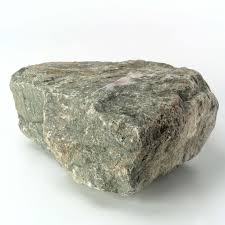 It is where we meet gravity directly and is the source of stability, the sthira of sthira sukham asanam. From one point of view, some of the qualities of earth are solid, dense, and cold. Feel this weightiness as the magnetic pull of the earth. Earth is associated with the 1st or root chakra, the muladhara, and the sense of smell, the most primal of our 5 senses.
Water has weight, is tangible, but has the additional qualities of mobility and flexibility. It flows, it dissolves, it carries power in its mobility. It allows life to flourish. We are watery creatures walking about on land, carrying the ocean inside of us. Feel this. Feel like you are on a surf board, anchored, but free to ride the waves. Water is associated with the second chakra at the sacral region and the sense of taste.
Fire is the third element, expressed at the third chakra, the solar plexus. Connected to digestion, the fire of burning the fuel of food, the element fire is felt as warmth of the body. We are warm blooded creatures . Fire also represents dynamic action, passion, burning desire: and, at times, anger. Fire balances water. Iyengar describes them as anti elements. Too much fire and the water disappears into air. Too much water and the fire is extinguished. Finding balance here is primary. We can also see water and fire emotionally, as parasympathetic/relaxing/cooling and sympathetic/fiery arousal. People with a pitta constitution in Ayurveda have a strong fire element.
Air is the gaseous state of matter, often referred to as ‘wind’. The five pranas are aspects of the element air as experienced in the ‘breath’. Air also refers to communication, as in the nervous system. Mercury, the messenger of the gods, rules Gemini, an air sign in astrology. Air is associated with the fourth chakra at the heart.
There is no good equivalent to the fifth element, akasha. The closest is space or spaciousness. It refers to the aspect of creation that contains all other aspects. Einstein would agree, as he recognized that space, as described in physics, is subject to change. It is not fixed or absolute, which was the belief in science for centuries. This is still not an easy concept to grasp, but we all can experience the felt sense of having space, or needing more space, or expanding in to spaciousness.
The five organs of action are: arms, legs, excretory organs, generative or sexual organs and mouth. These are physical, tangible vehicles that allow us to interact with the world. I yoga practice we train arms and legs to help move and support the body. Certain asanas, ( as well as sensible dietary choices!) help the excretory organs to function in a healthy manner. Ayurveda considers that disease often begins with poor elimination. The sex organs have much hormonal/physiological/emotional power which also must be utilized intelligently. The mouth is the source of both speaking and eating. Wise speech is an important aspect of an intelligent and compassionate life.
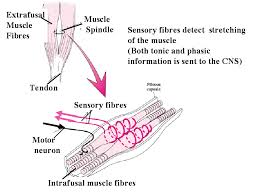
The five organs of perception are: eyes, ears, nose, tongue and skin and the subtle elements that accompany them are sight, sound, smell, taste and touch. In asana, the skin is the primary organ of perception. Related to skin as tactile sensors are the nerve endings in the joints and tendons that respond to pressure and tension, and the inner ears for balance and coordination. Information coming from within the body is fed to the intelligence, the buddhi and adjustments are made by moving bones, redirecting energy flow, until there is a dynamic, self sustaining stability in the posture. This is sthira sukham, this is samyama in asana. Over time, the energy lines stabilize and the connective tissue pathways become charged with aliveness. The blood vessels, nerves and muscle fibers all listen to the energies traveling along the expanding fascial highways and respond as a single intelligence, moment to moment, adapting the needs as they change. this is the awakening of the intelligence of the body that is cultivated in samyama. (In a baby first learning to sit, stand and walk, the information flow to the movement brain (cerebellum and parts of the cortex) happens instinctively and the child’s attention is absorbed by learning to move. No thought or analysis is needed. However this process is soon overridden by the need to acquire language and manage the other cultural and egoic demands. This somatic intelligence tends to fade into the background. Some aspects may be employed in learning specific movement skills such as athletics or dance, but only asana explores the whole process for its own sake. )